Last Updated: October 27, 2026
Quick Summary
Preventing occupational illnesses in industrial settings starts with identifying workplace health hazards, then assessing worker exposure with a written checklist and comparing results to exposure limits. Apply the hierarchy of controls so engineering controls capture hazards at the source, and verify every control on a schedule.
- An occupational illness is any disease or health condition caused by work exposure.
- Read exposure results as a ratio to the PEL, not as a raw number.
- The hierarchy of controls runs from elimination and substitution to engineering controls, administrative controls, and PPE.
- An 8-hour time-weighted average of 85 dBA triggers a hearing conservation program under OSHA.
- Track leading indicators such as the percentage of controls verified on schedule, reviewed monthly.
Table of Contents
- Step 1: Identify Workplace Health Hazards Before They Harm Anyone
- Step 2: Build a Workplace Exposure Assessment Checklist
- Step 3: Apply the Hierarchy of Controls (With Examples)
- Step 4: Put Workplace Chemical Exposure Prevention Into Practice
- Step 5: Select, Fit, and Maintain PPE and Respiratory Protection
- Step 6: Launch an Occupational Illness Prevention Program
- Step 7: Verify Controls, Track Leading Indicators, and Catch Long-Latency Disease Early
- Next Step: Have Your Exposure and Control Gaps Reviewed
- Frequently Asked Questions
Step 1: Identify Workplace Health Hazards Before They Harm Anyone
Preventing occupational illnesses in industrial settings starts with knowing what can cause occupational illnesses in your workers.
Walk your floor and look for five hazard families:
- Chemical hazards: solvents, acids, degreasers, and process chemicals
- Hazardous substances: silica dust, metal fumes, and welding smoke
- Biological hazards: mold, bacteria, and bloodborne pathogens
- Physical hazards: noise exposure, heat stress, vibration, and radiation
- Ergonomic and skin stressors: repetitive motion and dermatitis triggers
The OSHA Hazard Identification guidance lays out the walkthrough approach inspectors expect to see documented.
Watch out: teams often miss hazards that only appear during maintenance, repair and maintenance tasks, or upset conditions.
If you want a concrete rundown of workplace chemical exposure risks, read our guide to common workplace chemical exposure risks.
Step 2: Build a Workplace Exposure Assessment Checklist
A workplace exposure assessment checklist is a written tool that records who is exposed, to what, for how long, and at what level. It turns vague concern into a defensible record. Build yours around these items:
- Task and job title being assessed
- Hazardous substances involved, with safety data sheets on hand
- Exposure route: inhalation, skin contact, ingestion
- Duration and frequency of the task
- Existing engineering controls and ventilation

Choose the Right Measurement Method
Exposure assessment is where guesswork gets replaced with numbers, but the numbers only mean something if you picked the right instrument. Match the method to the hazard:
- Air sampling for gases and vapors: use sorbent tubes with a calibrated personal pump, or colorimetric detector tubes for a quick screening read. Full-shift sampling is the default for comparing to an 8-hour limit.
- Air sampling for dusts, fumes, and fibers: use a filter cassette with a cyclone or respirable sampler, then weigh the filter in a lab. Welding fume and silica dust require this approach, a detector tube will not give you a defensible result.
- Noise dosimetry: clip a dosimeter to the worker for a full shift to get a time-weighted average. A sound level meter gives you an instantaneous reading, which is useful for locating sources but not for compliance.
- Surface sampling: wipe a defined area with a solvent-moistened wipe to check for contamination on tools, rails, and break areas, especially important for lead and other metals that migrate home on clothing.
- Direct-reading instruments: use them to find leaks, hot spots, and upset conditions in real time, then confirm with a lab method before you rely on the result.
Interpret Results Against Exposure Limits
A sample result is meaningless until you compare it to the right limit. The two you will use most are the OSHA permissible exposure limit (PEL), the legally enforceable ceiling, and the NIOSH recommended exposure limit (REL), which is often lower and more protective (the CDC).
Read results as a ratio, not a raw number. If a substance has a PEL of 50 ppm and your sample comes back at 25 ppm, you are at 50% of the limit, a warning band that calls for tighter controls before you hit the ceiling.
A single sample is a snapshot, not a verdict. Sample the highest-exposure workers in each similar exposure group, on their highest-exposure days, and document the sampling and analytical method so the result holds up under review.
Rank Tasks and Set Reassessment Intervals
Once you have numbers, rank each task by risk: exposure ratio times duration times number of workers affected. High-ratio, long-duration tasks with many workers go to the top of the control list. Set a reassessment interval for each, annually for stable processes, sooner after any process change, new chemical introduction, or control modification. For a fuller method, our 7-step chemical exposure assessment methodology walks through the sequence.
Step 3: Apply the Hierarchy of Controls (With Examples)
The hierarchy of controls is a ranked order of protection, from most effective to least: elimination, substitution, engineering controls, administrative controls, and PPE. Here are hierarchy of controls examples for a metal fabrication shop:
| Control Level | Example | Impact |
|---|---|---|
| Elimination | Remove a degreasing step entirely | Removes the hazard |
| Substitution | Swap a toxic solvent for a safer one | Reduces toxic exposure |
| Engineering controls | Local exhaust ventilation at the weld station | Captures fumes at the source |
| Administrative controls | Rotate workers off the task every two hours | Cuts exposure duration |
| PPE | Respirators and chemical gloves | Last line of defense |
The logic is simple: hazard elimination and engineering controls protect everyone in the room without relying on individual behavior. PPE only protects the person wearing it correctly. Most industrial hygiene failures trace back to skipping straight to respirators and gloves.
Step 4: Put Workplace Chemical Exposure Prevention Into Practice
Workplace chemical exposure prevention works best when controls are built into the task, not bolted on afterward. Start with these moves:
- Close containers and label every secondary container
- Install local exhaust ventilation at the point of release
- Write safe work practices for each chemical task
- Train workers on skin exposure and dermatitis risks
- Post exposure limits where the substance is used
Dust and fumes deserve special attention. Silica dust from cutting and grinding, and metal fumes from welding, cause long-latency disease that shows up years later. Wet methods and on-tool extraction cut both at the source. NIOSH research on occupational exposure documents why source control beats respiratory protection alone.
Step 5: Select, Fit, and Maintain PPE and Respiratory Protection
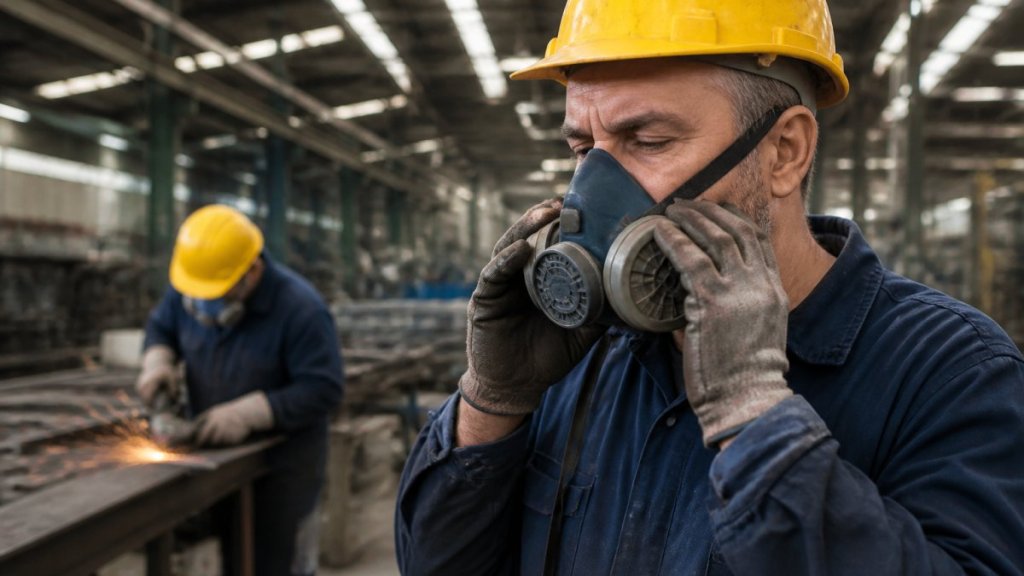
PPE is the last line of defense, and it only works when it fits. Respirator selection follows the exposure level and the substance, then a medical evaluation, then fit testing.
Watch out: a respirator worn over a beard, or a glove reused past its breakthrough time, gives false confidence. For the specifics of what a written respiratory protection program must contain, see what the written respiratory protection program requires.
Step 6: Launch an Occupational Illness Prevention Program
An occupational illness prevention program is a written system that ties hazard identification, exposure assessment, controls, training, and medical surveillance together. Launch it in this order:
- Assign a program administrator with authority
- Write the hazard and control inventory
- Set safe work practices and training schedules
- Schedule exposure monitoring and health monitoring
- Create incident reporting and corrective actions
- Build worker participation into every step
Worker education matters more than most managers expect. Safety training in the worker’s own language, with symptom reporting encouraged and no retaliation, surfaces problems early. Our guidance on developing effective injury and illness prevention programs covers the structure that holds up under review.
Step 7: Verify Controls, Track Leading Indicators, and Catch Long-Latency Disease Early
Controls degrade. Ventilation hoods lose capture velocity, filters clog, and glove inventories drift out of spec. Verification means checking that each control still performs as designed, then logging equipment maintenance and corrective actions.
Verify Each Control Against a Measurable Criterion
Do not verify by walking past and eyeballing. Give every control a pass/fail test:
- Local exhaust ventilation: measure capture velocity at the hood face with a velometer and compare to the design specification.
- Respirators: confirm fit testing is current, medical evaluations are on file, and cartridges are changed on schedule. Check that the written program names an administrator and that qualitative fit testing stays within its assigned protection factor ceiling.
- Machine guards and interlocks: test that interlocks actually stop the machine, not just that the guard is bolted on.
- Noise controls: re-measure dosimetry after any equipment change; a new compressor can push a quiet area over the action level.
- Gloves and PPE inventory: confirm the glove material still matches the chemical and that breakthrough times have not been exceeded in practice.
Log every verification with the date, the tester, the measured value, and the pass/fail result. That log is what an inspector asks for when a control is called into question.
Track Leading Indicators, Not Just Illness Rates
Injury and illness counts are lagging indicators, they tell you about harm that already happened. Leading indicators tell you whether the program is working before someone gets sick:
- Percentage of controls verified on schedule
- Exposure monitoring results versus exposure limits, tracked as a trend
- Training completion and comprehension scores
- Number of symptom reports filed (a rising count can be good, it means reporting is working)
- Time to close corrective actions
Review these monthly, not annually.
Catch Long-Latency Disease Early
Long-latency disease is the hard part. Conditions like dermatitis, hearing loss, and dust-related lung disease develop slowly, so medical surveillance and health monitoring catch drift before it becomes permanent. Early detection depends on three things working together:
- Surveillance tied to exposure records. Medical surveillance should target the workers actually exposed, audiometric testing for noise-exposed workers, spirometry for dust-exposed workers, skin checks for chemical handlers. Keep exposure records linked to the worker’s surveillance file so a physician can see what the worker was exposed to and when.
- Symptom reporting without fear. Workers notice early symptoms, a persistent cough, ringing ears, a rash, long before a diagnosis. Build a reporting channel that does not require the worker to identify themselves as the source of a problem, and never retaliate for a report.
- Record retention that outlasts the exposure. Some diseases emerge years after exposure ends. Keep exposure and surveillance records for the full retention period your jurisdiction requires so a future diagnosis can be connected to past work.
A control that is not verified is a control you are assuming works. Verification logs, leading indicators, and surveillance records are what turn that assumption into evidence.
Next Step: Have Your Exposure and Control Gaps Reviewed
Michael Karl McNeil brings twenty-five years of fire service prevention work and industrial hygiene practice to that review. We offer industrial hygiene monitoring, written safety programs, and Cal/OSHA citation defense.
If you want to know what a professional industrial hygiene audit involves and what it delivers, review our audit process and benefits.
Frequently Asked Questions
What are the most common occupational illnesses in industrial settings?
The most frequent are respiratory disease from dust, fumes, and vapors; noise-induced hearing loss; contact dermatitis and other skin conditions from chemical exposure; heat stress; and musculoskeletal disorders from repetitive work and heavy lifting. Long-latency conditions such as occupational asthma and certain cancers can take years to appear, which is why exposure monitoring and medical surveillance matter even when no one feels sick today. A prevention program should prioritize the hazards your own exposure assessment identifies at your site.
How often should workplace exposure assessments be conducted?
Repeat assessments whenever a process, chemical, equipment, or work practice changes, after a near-miss or incident report, and on a routine cycle for ongoing operations. High-exposure tasks may need periodic personal sampling and direct-reading checks, while stable low-exposure areas can be reviewed less often. Use your workplace exposure assessment checklist to record what was measured, the method, the results against exposure limits, and the corrective actions taken, so the next review starts from evidence rather than memory.
What should an occupational illness prevention program include?
A workable program covers hazard identification, exposure assessment, control selection through the hierarchy of controls, written safe work practices, PPE selection and maintenance, safety training and worker education, exposure monitoring, medical surveillance and symptom reporting, incident reporting with corrective actions, and periodic workplace inspections. Assign responsibilities, set a review schedule, and track leading indicators such as completed inspections and closed corrective actions so leadership can see whether the program is working before an illness appears.
When should employers provide health monitoring for workers?
Provide medical surveillance when your exposure assessment indicates it is appropriate. Baseline exams, periodic testing, and exit exams create a record that supports early detection of long-latency disease. Pair health monitoring with clear symptom reporting channels so workers can raise concerns without fear, and act on results by revisiting exposure controls rather than treating the exam as a formality.


Leave a Reply