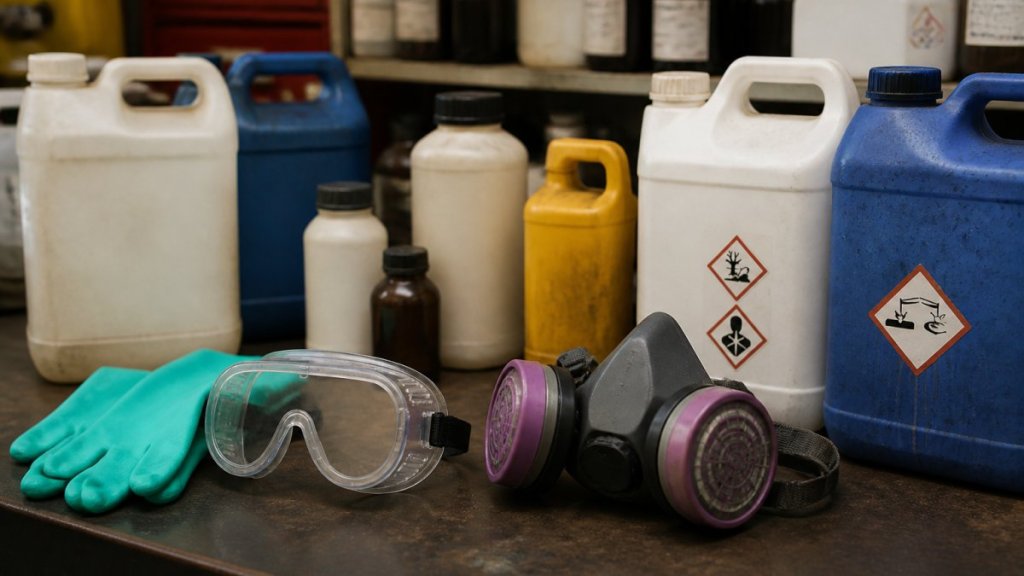
Table of Contents
- Why Chemical Exposure Risks Still Dominate Workplace Injury Data
- Examples of Chemical Hazards in the Workplace: 10 Groups to Know
- Chemical Exposure Routes: How Substances Enter the Body
- Acute Poisoning vs. Chronic Health Effects: Reading the Timeline
- Safety Data Sheets for Workplace Chemicals: What Managers Miss
- Chemical Exposure Prevention: Controls That Hold Up on the Floor
- Digital Tools, Psychological Impact, and the Compliance Gaps Inspectors Find
- Conclusion: Turning Exposure Data into Daily Practice
- Frequently Asked Questions
Last Updated: October 8, 2026
Why Chemical Exposure Risks Still Dominate Workplace Injury Data
Common workplace chemical exposure risks remain among the most persistent hazards in manufacturing, construction, and industrial operations.
Federal data from the Bureau of Labor Statistics shows that exposure to harmful substances or environments remains a leading cause of workplace fatalities year after year.
The problem is rarely a mystery chemical. It is usually a familiar one, used without the right controls.
Most chemical injuries trace back to routine tasks, not rare accidents. The controls you build for daily work matter more than the ones you save for emergencies.
Examples of Chemical Hazards in the Workplace: 10 Groups to Know
Knowing the common examples of chemical hazards in the workplace starts with sorting them into groups, each with its own controls.
Here are the ten groups safety managers should track:
- Solvents – degreasers, thinners, and cleaning agents
- Acids and bases – corrosives that burn on contact
- Chemical sterilants – used in healthcare and food processing
- Antineoplastic drugs – chemotherapy agents handled in clinics
- Anesthetic gases – waste gases in surgical settings
- Metal dusts and fumes – welding, cutting, and grinding
- Pesticides – agricultural and groundskeeping chemicals
- Adhesives and resins – two-part epoxies and glues
- Cleaning products – bleach, ammonia, and disinfectants
- Compressed gases – flammables, oxidizers, and toxics
Each group carries its own inhalation, skin, and fire risks.
Solvents, Acids, and Corrosives
Solvents dissolve grease and grime, which is why they also strip oils from your skin.
Acids and corrosives cause immediate damage, a splash injures skin in seconds, and they eat through metal, so storage matters.
A common mistake is treating all solvents the same. A closed container in a ventilated room is fine. An open pan in a corner is not.
- Store corrosives away from solvents
- Use secondary containment for liquids
- Keep eyewash stations within reach
Chemical Sterilants, Antineoplastic Drugs, and Anesthetic Gases
These three groups sit in healthcare and lab settings and are easy to overlook. Chemical sterilants like glutaraldehyde can trigger asthma, and antineoplastic drugs require handling protocols most general safety programs never cover.
Anesthetic gases escape during surgery. Without proper scavenging systems, staff breathe trace amounts all day.
What most guides miss is that these exposures are often invisible. No smell, no spill, no alarm. Just slow, repeated contact.
Treating sterilants and antineoplastic drugs like ordinary cleaning chemicals is a common gap. Workers get exposed during routine handling, and the health effects may not show up for months.
Chemical Exposure Routes: How Substances Enter the Body
Chemical exposure routes describe how a substance enters the body. There are four main paths: inhalation, skin contact, ingestion, and injection.
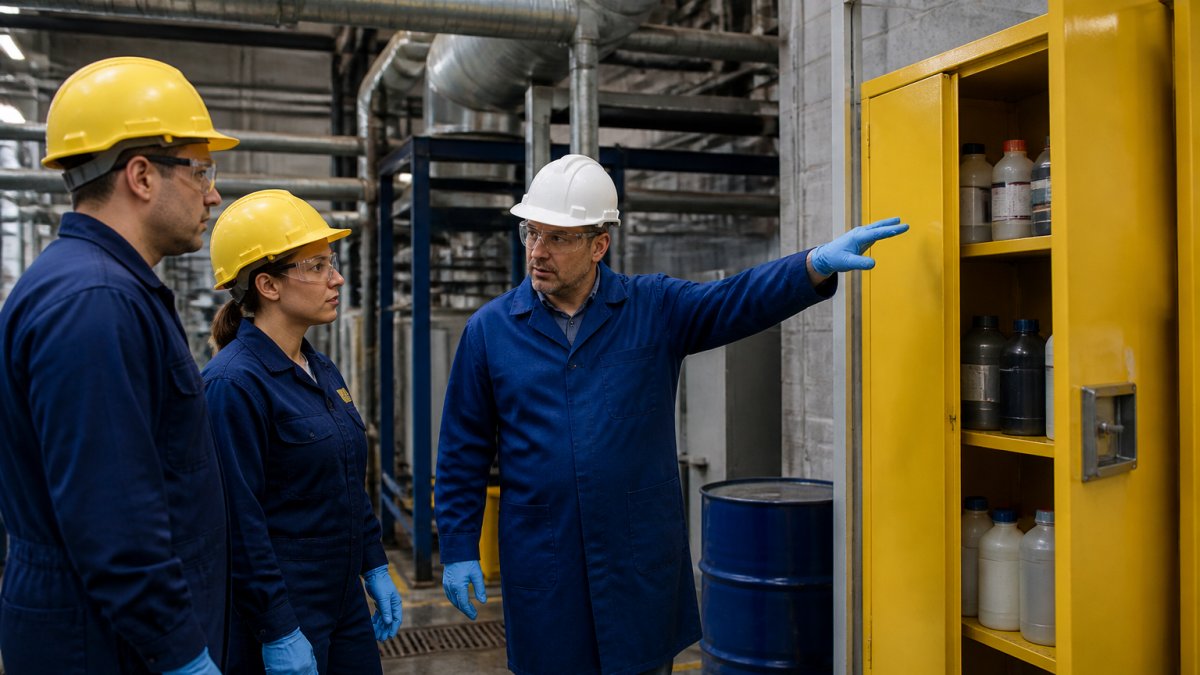
Inhalation is the most common route: vapors, dusts, and fumes go straight to the lungs and bloodstream.
Ingestion happens more than people think, from contaminated hands, food, or drinks in work areas.
- Inhalation – breathing vapors, dusts, or fumes
- Dermal absorption – skin contact, especially with cuts
- Ingestion – hand-to-mouth contact or eating in the work zone
Understanding these pathways tells you where to focus your controls.
Acute Poisoning vs. Chronic Health Effects: Reading the Timeline
Acute poisoning happens fast: one high-dose exposure causes symptoms within minutes or hours, like a chlorine gas release or a chemical splash. Chronic health effects build slowly, low doses over months or years cause the damage, including carcinogenicity, organ damage, and nervous system harm. The timeline changes how you investigate: an acute case points to a single failure, a chronic case to a system that never controlled the exposure.
Respiratory and Skin Impacts: Sensitization and Dermatitis
The lungs and skin take the first hit. Inhalation hazards cause coughing, wheezing, and long-term breathing problems. Some chemicals trigger sensitization, meaning one exposure makes you react to tiny amounts forever.
Dermatitis is the most common skin issue, showing up as redness, cracking, and pain. Once the skin barrier breaks, other chemicals get in more easily.
- Watch for recurring rashes on the hands and forearms
- Track breathing complaints tied to specific tasks
- Rotate workers away from sensitizers early
Safety Data Sheets for Workplace Chemicals: What Managers Miss
Safety Data Sheets for workplace chemicals are the first place to look, but most managers stop at Section 8, a mistake.
- Section 2 (Hazard Identification), the GHS hazard class and signal word. This tells you what pictogram goes on the secondary container label.
- Section 4 (First-Aid Measures), what to do in the first sixty seconds after contact. This is the section workers need memorized, not filed.
- Section 6 (Accidental Release Measures), spill containment method, cleanup materials, and evacuation distance. This drives your spill kit selection.
A common mistake is filing the SDS and never reading it with the crew. The sheet only works if workers know what it says.
The Occupational Safety and Health Administration Hazard Communication Standard (29 CFR 1910.1200) requires employers to keep SDSs accessible during every shift.
Three translation steps turn an SDS into a floor-level control:
- Pull the SDS for every chemical on site. If you cannot find one, request it from the manufacturer in writing. Suppliers must provide it.
- Compare Section 8 limits against your air monitoring data. If your measured levels are within 50% of the PEL, you need better engineering controls, not just PPE.
- Build a one-page task sheet for each chemical your crew uses daily. List the exposure limit, the required PPE, the first-aid step from Section 4, and the spill response from Section 6.
Workers read one page far more often than a full SDS. Post the task sheet at the point of use, and keep the full SDS within arm’s reach for reference.
Secondary containers are where SDS compliance breaks down most often. Any container that is not the original manufacturer’s packaging needs a GHS-compliant label with the product identifier, hazard pictograms, signal word, and precautionary statements. A sharpie mark on a spray bottle does not meet the standard.
What Inspectors Actually Check
When OSHA opens a hazard communication inspection, they look for four things:
- A written hazard communication program that names the responsible person
- A chemical inventory that matches the SDS binder
- Training records with dates, topics, and worker signatures
If your paperwork says one thing and the floor shows another, the citation writes itself.
Chemical Exposure Prevention: Controls That Hold Up on the Floor
Chemical exposure prevention follows a hierarchy: eliminate, substitute, engineer, administrate, then protect. The top controls work better because they do not rely on people behaving perfectly. Ventilation and enclosure come before PPE, pull fumes away at the source and you remove the exposure. PPE is the last line, not the first, but it still matters: respiratory protection and gloves must match the chemical and the task, because wrong gloves are worse than no gloves.
- Substitute a safer chemical when one exists
- Install local exhaust ventilation at the source
- Set work rules that limit exposure time
Emergency Response by Chemical Class
Every chemical class needs its own response plan. A solvent fire is not a corrosive spill. Treating them the same wastes the first five minutes.
For corrosives, flush immediately and isolate the area. For flammable solvents, cut the ignition source before anything else. For toxic gases, evacuate upwind and call for help.
Write the plan by class, not by chemical. Then post it where the work happens.
Using one generic spill kit for every chemical is a common gap. A kit that works for a solvent spill may do nothing for an acid. Match the kit to the class, and train the crew on which one to grab.
Digital Tools, Psychological Impact, and the Compliance Gaps Inspectors Find
Two areas get ignored in most programs: the mental toll of working around toxics and the tools that make monitoring easier.
The Psychological Toll of Chronic Exposure Risk
Workers who handle carcinogens, sterilants, or antineoplastic drugs carry a specific stress, not the acute fear of a spill, but the always-on awareness that today’s routine task could contribute to a disease that shows up in twenty years.
That stress shows up in predictable ways:
- Vigilance fatigue, sustained alertness around hazardous materials degrades over a shift. Workers stop noticing the smell, stop double-checking the seal, stop reading the label.
- Normalization of deviation, when a task is done the same risky way for months without a visible consequence, the risk stops feeling real. This is how a missing glove becomes routine.
- Presenteeism and turnover, workers worried about exposure may underreport symptoms to avoid reassignment, or leave the role entirely. Both outcomes hide the problem from safety data.
What helps is not a wellness poster but transparency. Workers who know the actual monitoring numbers, understand the controls in place, and see corrective actions closed out carry less ambient anxiety than workers told “don’t worry about it.” Share air monitoring results with the crew in plain language: “This task measured at 12% of the exposure limit” is more reassuring than silence, and it gives workers a reason to trust the controls.
Digital Exposure Monitoring Tools
Direct-reading instruments have changed day-to-day exposure management. Instead of a single industrial hygiene sampling event per year, modern tools log continuous data.
- Photoionization detectors (PIDs), real-time volatile organic compound readings. Useful for solvent tasks where exposure spikes with each open container.
- Colorimetric detector tubes, low-cost, task-specific spot checks for gases like ammonia, chlorine, or hydrogen sulfide.
- Wearable exposure monitors, personal badges that log concentration over a shift, tied to the worker and the task rather than the room.
The value is not the sensor but the pattern.
Most small and mid-size operations do not need a full sensor network. A single PID and a handful of detector tubes, used consistently on the highest-risk tasks, surface more actionable data than an annual sampling event.
The Compliance Gaps Inspectors Find
Inspectors look for the same things every time:
- A written chemical hygiene plan that matches actual practice, not a template
- Hazard communication training with dates, topics, and worker signatures
- Exposure monitoring records tied to specific jobs and tasks
The gap is almost never the absence of a program but the distance between what the program says and what the floor shows. A plan naming a ventilation system the facility does not have, or a training log signed by workers who cannot describe the hazard, is worse than no plan at all.
The most common citation pattern is not a missing document. It is a document that contradicts the floor. Walk your own facility against your written program before an inspector does it for you.
Conclusion: Turning Exposure Data into Daily Practice
Chemical exposure risks do not disappear because a program exists on paper. They shrink when controls match the task, training matches the chemical, and data drives the next fix.
That is where Michael Karl McNeil comes in. A former Fire Battalion Chief and Registered Industrial Hygiene Professional, Michael Karl McNeil brings industrial hygiene monitoring, written safety programs, and Cal/OSHA citation defense to operations, helping teams find gaps before an inspector does.
Start a website
Frequently Asked Questions
What are common chemical hazards in the workplace?
Common chemical hazards include solvents, acids and corrosives, chemical sterilants, antineoplastic drugs, anesthetic gases, adhesives, paints, and cleaning agents. These substances present inhalation hazards, dermal absorption risks, flammability, and reactivity concerns. Under OSHA’s Hazard Communication Standard (29 CFR 1910.1200), employers must inventory these chemicals, maintain Safety Data Sheets, and train workers on the specific hazards and required personal protective equipment for each product they handle.
What are the main ways chemicals enter the body at work?
The four primary chemical exposure routes are inhalation, dermal absorption, ingestion, and injection. Inhalation is the most common route in industrial settings, especially where ventilation systems are inadequate. Dermal absorption matters for solvents and pesticides that pass through intact skin. Ingestion typically results from contaminated hands, food, or drink in work areas. Injection is rare but possible with high-pressure equipment. Each route demands different controls, from respiratory protection to glove selection and hygiene practices.
How can workers reduce exposure to hazardous chemicals?
Workers can reduce exposure by following the hierarchy of controls: substituting safer chemicals, using engineering controls like ventilation systems, and wearing appropriate personal protective equipment. Specific steps include reading the Safety Data Sheet before handling a new product, keeping containers closed when not in use, washing hands before eating, and reporting any skin irritation or breathing difficulty immediately. Employers should reinforce these practices through hazard communication training and regular workplace safety culture checks.
What should workers do if they suspect chemical exposure?
Move to fresh air immediately if inhalation is suspected, rinse affected skin or eyes for at least 15 minutes, and notify a supervisor. Follow the first-aid section of the chemical’s Safety Data Sheet. For significant exposures, seek medical evaluation and document the incident for OSHA recordkeeping under 29 CFR 1904. Employers should review the event to identify whether engineering controls, respiratory protection, or work practices need improvement.


Leave a Reply