
Table of Contents
- What a Health & Safety Consultancy Actually Does
- The Difference Between Training and Consulting
- Why an OSHA Compliance Audit Matters Now
- Conducting a Workplace Safety Risk Assessment
- Occupational Health and Safety Program Development
- How to Vet a Health & Safety Consultant
- Conclusion
- Frequently Asked Questions
Last Updated: September 9, 2026
A health & safety consultancy serves as an extension of your management team, identifying workplace hazards you might have missed and building the systems that keep people safe. The value is not in a generic checklist, but in a specialist who understands the regulatory landscape and how your specific operations actually run. With my background as a former Fire Battalion Chief and industrial hygienist, I have spent over two decades helping organizations close compliance gaps before they become incidents. Below, I break down what a health & safety consultancy really does, where it fits alongside your internal team, and how to choose one that will actually move your safety performance.
What a Health & Safety Consultancy Actually Does
A health & safety consultancy provides specialized expertise that most organizations cannot justify keeping on staff full-time. This includes regulatory compliance audits, industrial hygiene monitoring, written program development, incident investigation, and expert witness support. Consultants step in for a defined scope of work, deliver a professional assessment or program, and hand over the tools your team needs to sustain the improvements.
The work typically falls into a few distinct categories. Some engagements center on a specific problem, such as a citation you need to contest or a near-miss you need investigated. Others are proactive, like developing an Injury and Illness Prevention Program from scratch. The common thread is that a consultant brings depth of experience across many facilities, so they recognize patterns and solutions your team may not have encountered.
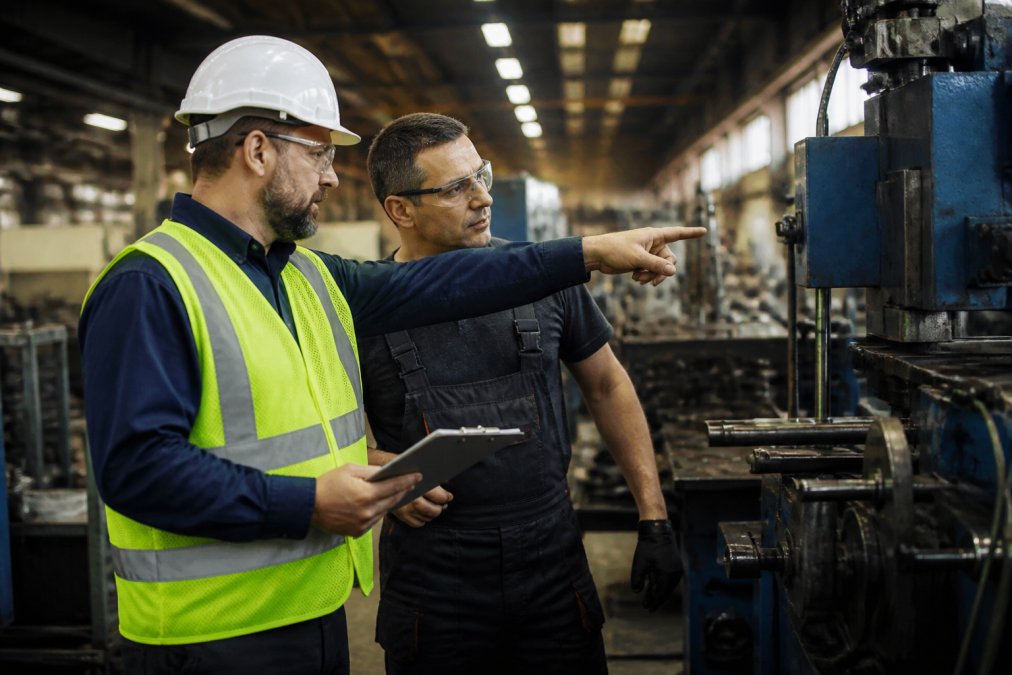
A consultant is not a replacement for your safety staff. The right engagement builds your internal capability so safety becomes part of daily operations, not a monthly event.
The Difference Between Training and Consulting
Many organizations confuse safety training with safety consulting, and the distinction matters for your budget and your outcomes. Training transfers knowledge to your workforce: how to lift properly, how to use a fire extinguisher, how to recognize chemical hazards. Consulting, by contrast, examines your systems, identifies gaps, and designs solutions tailored to your operations.
Training is a component of a strong safety program, but it will not fix a flawed program design. You can train every employee on hazard communication, yet still fail an inspection if your written program does not meet regulatory requirements. A consultant diagnoses the underlying system issues, then recommends the training that actually addresses your gaps. This is why I often tell clients that consulting comes first: you need to know what you do not know before you spend money on instruction.
Why an OSHA Compliance Audit Matters Now
An OSHA compliance audit is a systematic review of your facility against current regulatory standards, and it is the fastest way to find gaps before an inspector does. But the most compelling reason to conduct one isn’t just fear of a citation; it’s the financial reality of workplace incidents. Workplace incidents carry significant financial consequences. When you factor in indirect costs, like overtime, lost productivity, and administrative time, the total often exceeds the direct cost by a factor of four (osha.gov). A professional audit is a fraction of that potential cost, making it one of the highest-ROI activities a facility can undertake.
To make that ROI tangible, a framework can be used to calculate it before scheduling an audit. Identifying an organization’s Total Recordable Incident Rate (TRIR) and comparing it to the industry average can highlight areas for improvement. Estimating the direct cost of common incident types and multiplying by historical incident frequency provides a baseline annual cost. Correcting systemic issues can lead to a reduction in incident rates, offering a defensible estimate of an audit’s value. This approach helps secure budget for safety improvements.
The audit process itself covers several areas: review of your written programs, a physical walkthrough of the facility, and interviews with employees. Each element reveals different risks. A written program may exist but not reflect what actually happens on the floor. The physical walkthrough catches hazards that have become normalized through daily repetition. Employee interviews often surface the gap between documented procedure and real practice.
Skipping an audit because you “already know your facility” is a common mistake. Familiarity breeds blind spots, and the cost of a citation, or worse, an injury, far exceeds the cost of a professional review.
A compliance audit also serves as a defense if OSHA does come knocking. Documentation of a proactive audit, with corrective actions tracked to completion, demonstrates good faith and can significantly reduce penalties during a settlement. For help navigating an existing citation, the OSHA citation and penalty procedures outline the formal process for contesting violations and negotiating settlements.
Beyond the immediate financial case, consider the strategic advantage. A facility that can demonstrate a robust, proactive audit program is often viewed more favorably by insurers, potentially lowering workers’ compensation premiums. Furthermore, many large clients and general contractors now require proof of a recent third-party audit as a condition of doing business. In this environment, an audit isn’t just a defensive measure; it’s a competitive credential that opens doors.
Conducting a Workplace Safety Risk Assessment
A workplace safety risk assessment goes beyond compliance to evaluate the likelihood and severity of potential incidents across your operations. While an audit measures you against a standard, a risk assessment asks a different question: what could hurt someone here, and how bad could it be? The output is a prioritized list of hazards ranked by risk, which then drives where you focus your resources.
The assessment process follows a logical sequence. First, I walk the entire facility, observing work processes and talking with the people doing the work. Second, I review incident history, including near-misses, which are often the best predictor of future problems. Third, I evaluate each identified hazard for both probability and potential severity. The result is a risk matrix that shows you exactly where to spend your limited safety budget for maximum impact.
A thorough risk assessment also addresses the hazards you cannot see. Industrial hygiene monitoring, for example, measures employee exposure to noise, airborne contaminants, and chemical agents. Many hazards are invisible until they cause harm, and NIOSH guidance on workplace exposure monitoring provides a framework for identifying when sampling is warranted. This is where my training as an industrial hygienist adds a layer most general consultants cannot offer.
Occupational Health and Safety Program Development
Occupational health and safety program development is the process of turning audit findings and risk assessments into a documented, working management system. This is where compliance becomes sustainable. A strong program includes written policies, assigned responsibilities, training plans, inspection schedules, and a process for correcting hazards when they are found.
The most effective programs share a common structure, often modeled on the Plan-Do-Check-Act cycle. You plan by setting objectives and assigning responsibility. You do by implementing training and controls. You check through regular inspections and incident review. You act by correcting deficiencies and improving the program. This continuous improvement loop is what separates a living program from a binder on a shelf.
Documentation is the backbone of any program, but it must be practical. I have reviewed countless written programs that were technically compliant yet completely disconnected from reality. The best programs are written in plain language, reference the specific equipment and chemicals in your facility, and are actually used by supervisors during their daily walkthroughs. If your program does not guide daily decisions, it is not a program, it is a file.
How to Vet a Health & Safety Consultant
Choosing the right health & safety consultancy requires the same rigor you would apply to any critical vendor, and the wrong choice carries real risk. A consultant who does not understand your industry will deliver generic advice that fails an audit or, worse, misses a hazard entirely. The vetting process, however, should look different depending on the size and complexity of your operation.
For a small business, say, under 100 employees, the primary need is often for a consultant who can act as a part-time safety director. You need someone who can build your foundational programs, conduct the initial audit, and be on call for questions. Your vetting should focus on breadth and communication. Ask: Can they simplify complex regulations into actionable steps for your team? Do they have experience with OSHA’s consultation services? Can they provide a fixed-scope proposal? Look for a consultant who will be personally invested in your account.
For a large enterprise or a high-hazard industry like construction or manufacturing, the vetting process is more rigorous. You are not looking for a generalist, but for a specialist with deep technical expertise in your specific operations. This is where you must verify credentials beyond a general certification. Look for a Certified Industrial Hygienist (CIH) if you have chemical or noise exposures, or a Certified Safety Professional (CSP). Ask about their experience with specific OSHA standards that apply to your facility, such as Process Safety Management (PSM) for chemical plants or Subpart C for construction. Request case studies that demonstrate their problem-solving on issues similar to yours.
A critical, and often overlooked, step is conducting a technical interview with the actual consultant who will be on site, not just the sales representative. Prepare a scenario based on a real challenge you face. For example, describe a recurring near-miss and ask how they would approach the investigation. A strong consultant will ask clarifying questions and outline a systematic methodology. A weak one will give you a generic answer about ‘root cause analysis’ without any specifics.
Ask for references from businesses in your industry with similar operations. A consultant who has solved problems like yours, in facilities like yours, is far more valuable than one with impressive credentials but no relevant field experience.
Finally, consider the consultant’s regulatory relationships. Someone who has worked with the agencies that enforce the rules, whether through citation defense or formal representation, understands how inspectors think and what they look for. This perspective is invaluable when you are preparing for an inspection or contesting a citation.
To structure your evaluation, use a weighted scoring matrix. List your top five criteria, such as industry experience, technical credentials, communication style, proposed methodology, and references, and assign a weight to each based on your priorities. Score each candidate on a scale of 1 to 5 for every criterion. This forces you to make objective comparisons rather than relying on gut feeling or a compelling sales pitch. It also creates a documented record of your decision-making process, which is useful for internal stakeholders and demonstrates due diligence.
The table below summarizes the key differences between the main types of safety support to help you evaluate your options.
| Support Type | Best For | Typical Duration | Key Limitation |
|---|---|---|---|
| Safety Training | Building workforce knowledge | Hours to days | Does not fix system gaps |
| Compliance Audit | Finding regulatory gaps | Days to weeks | Identifies issues, does not solve them |
| Risk Assessment | Prioritizing hazard controls | Days to weeks | Requires follow-through on findings |
| Full Program Development | Building sustainable systems | Weeks to months | Requires internal ownership to sustain |
Conclusion
The landscape of workplace safety is too complex for any single manager to master alone. Whether you need to prepare for an OSHA inspection, investigate a near-miss, or build a program from the ground up, a health & safety consultancy brings the specialized experience to get it right the first time. The key is choosing a consultant who understands your operations and can translate regulations into practical action, not just another binder for your shelf.
With twenty-five years in the fire service and a Master of Science in Environmental Health, I have spent my career helping organizations across California and the Western states build safer workplaces. From Cal/OSHA citation defense to industrial hygiene monitoring and written safety program development, the work is always the same: understand the real conditions on the ground and fix them before they become incidents.
Frequently Asked Questions
What does a safety consultant do on a daily basis?
A typical day involves site visits to observe work processes, conducting workplace safety risk assessments, reviewing safety protocols, and meeting with management to discuss hazard identification. Consultants also analyze incident reports, inspect equipment and machinery for compliance, and provide recommendations for corrective actions. Time is also spent documenting findings, preparing reports, and staying current on OSHA standards and regulatory requirements. The work is hands-on and varies depending on the client’s industry and specific operational risks.
What qualifications do I need to be a safety consultant?
Most consultants hold a degree in occupational health, environmental health, or a related field. Professional certifications, such as a Registered Industrial Hygiene Professional (RIH), signal a high level of expertise. Hands-on experience is crucial; for instance, a background as a Fire Battalion Chief provides practical knowledge of emergency response and hazard control. Consultants must also stay current on evolving OSHA standards and regulatory compliance, which requires ongoing education and training.
What is the difference between safety training and safety consulting?
Safety training focuses on teaching specific skills, such as how to use a fire extinguisher or properly lift heavy objects. It is an educational process with defined learning objectives. Safety consulting is a broader service that analyzes your entire operation. A consultant performs an OSHA compliance audit, identifies workplace hazards, develops safety management systems, and helps build a stronger safety culture. While a consultant may provide some training, the core value is in strategic advice, program development, and risk mitigation.
How can a health & safety consultancy help with an OSHA audit?
Consultants help you prepare for, respond to, and recover from OSHA inspections. They conduct pre-audit assessments to find compliance gaps before an inspector does. During an audit, an experienced consultant can help you understand your rights and navigate the process. If citations are issued, they assist with abatement plans and can represent you in informal conferences or appeals. Their knowledge of specific OSHA standards helps turn a potentially costly citation into a manageable corrective action plan.
 Michael Karl McNeil
Leave a comment