
Last Updated: November 20, 2026
Quick Summary
You file a notice of contest by sending a written, itemized statement disputing the citation to the recipient identified in your citation packet within 15 working days of receiving the Citation and Notification of Penalty. The notice must name each contested item, state whether you dispute the violation, penalty, abatement date, or all three, and be signed by an authorized representative. Keep proof of service, such as a postmark or certified mail receipt.
- The 15-working-day clock starts the day after you actually receive the citation, counting only Monday through Friday and skipping state holidays.
- A valid notice must include the employer name and address, citation and inspection number, receipt date, and each contested item number.
- You can contest the violation, the penalty, the abatement date, or any combination, and you can mix and match by item.
- Filing a contest does not pause abatement obligations; correct the hazard or request a different date and document your progress.
- Once docketed, the case goes to the Occupational Safety and Health Appeals Board, and most cases settle at the informal conference.
Table of Contents
- The 15-Working-Day Deadline: How to Calculate It From Receipt
- What a Notice of Contest Must Include: Field-by-Field Checklist
- How to File a Notice of Contest With Cal/OSHA: Step by Step
- Which Parts of a Citation Can You Contest?
- What Happens After You File: Appeals Board Process and Review
- Partial Contests, Abatement Obligations, and Late Filings
- Common Mistakes That Sink a Citation Dispute
- Get Your Notice of Contest Reviewed Before the Deadline
- Frequently Asked Questions
The 15-Working-Day Deadline: How to Calculate It From Receipt
A Cal/OSHA citation is not the end of the story. You have 15 working days from receipt to file a notice of contest, and that window closes fast (Filing an appeal).
The clock starts on the date you actually receive the Citation and Notification of Penalty. Not the date it was written. Not the date it was mailed. Count only working days, Monday through Friday, and skip state holidays.
Counting Working Days From the Date of Receipt
Day one is the day after receipt. Count forward 15 working days and stop. That final date is your filing deadline.
Here is how it plays out in practice:
- Received Monday: deadline falls on a Monday two weeks later, plus one day for the weekend gap.
- Received Friday: the weekend does not count, so your window stretches further into the following weeks.
- Holiday in the middle: that day does not count either. Add it back.
Watch out: counting calendar days instead of working days is the single most common way employers lose their appeal rights.
The California Division of Occupational Safety and Health sets the rules here. When in doubt, file early. Filing early protects your rights.
What a Notice of Contest Must Include: Field-by-Field Checklist
A valid notice of contest is a written statement that you dispute the citation, and it must identify exactly what you are contesting. Cal/OSHA does not accept a phone call or an email saying “we disagree.”
Use this checklist before you sign and send:
- Employer name and address exactly as printed on the citation
- Citation and inspection number from the Citation and Notification of Penalty
- Date you received the citation (this anchors your deadline)
For a fuller walkthrough of drafting the document itself, see our guide on how do you write an OSHA notice of contest.
A Completed Notice of Contest Example
Here is what a clean, complete notice looks like in practice:
Notice of Contest
Employer: Ridgeline Fabrication, Inc., 1420 Industrial Way
Citation No.: 123456 | Inspection No.: 987654
Date of Receipt: November 3, 2026The employer contests the following items:
- Item 1 (Serious): We contest the violation classification and the proposed penalty. The cited condition was corrected before the inspection closed.
- Item 2 (General): We contest the proposed penalty only. The violation is acknowledged.
The employer requests an informal conference to discuss resolution.
Signed: J. Alvarez, Safety Director | November 12, 2026
Notice what this example does well. It names each item. It separates what is contested from what is accepted. And it asks for a conference up front.
How to File a Notice of Contest With Cal/OSHA: Step by Step
Filing means getting your written notice to the right recipient within the deadline and keeping proof that you did it. Follow these steps in order, and do not skip the recordkeeping at the end.
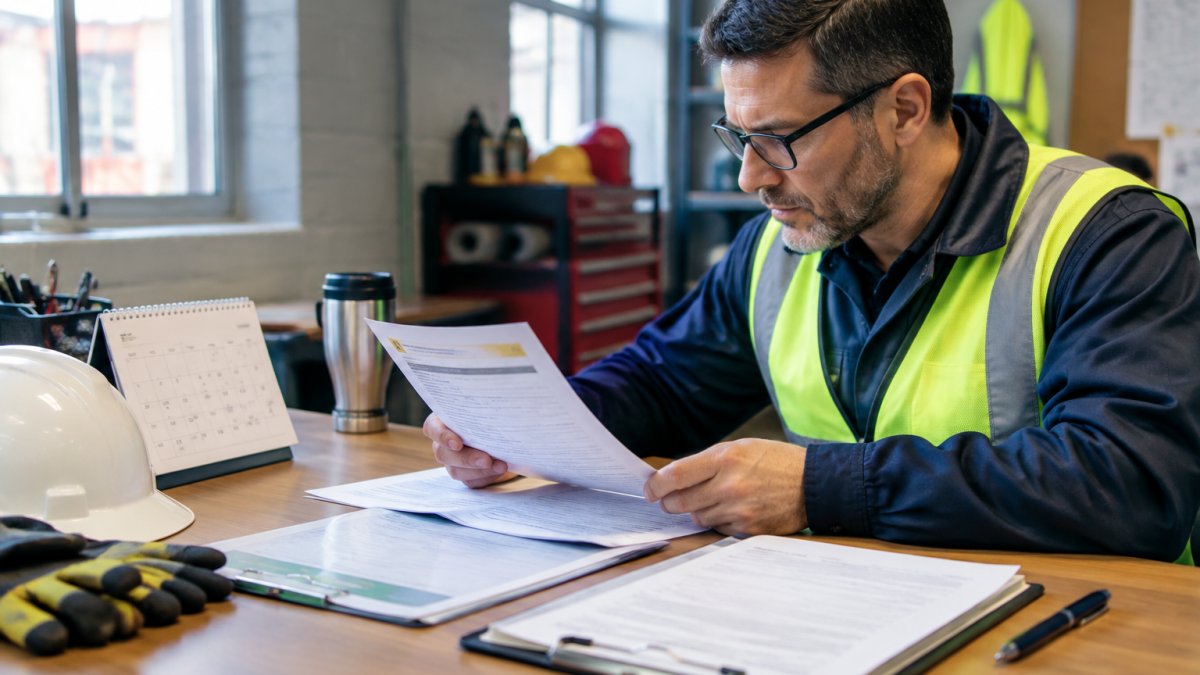
- Read the entire citation first. Note every item, its classification (general, serious, willful, repeat), the proposed penalty, and the abatement date. The citation packet also contains the return address and the district office that issued it.
- Mark your deadline on a calendar using working days from the receipt date, not calendar days. Write the receipt date down somewhere you will not lose it, because you will need it on the notice itself.
- Draft the notice using the field-by-field checklist above. Keep it short, specific, and itemized.
- Decide on scope. Contest everything, some items, or just the penalty or abatement date. You can mix and match by item.
- Sign it as an authorized representative of the employer, with your name and title printed or typed beneath the signature.
- Send it to the correct recipient using a method that creates a record (see below).
- Keep proof of service. A postmark, certified mail receipt, delivery confirmation, or dated fax confirmation all count. Store a copy of the signed notice with the proof.
Where to Send the Written Notice and How to Prove Service
The citation itself tells you where to file.
The federal and state procedures are not identical, so read the instructions printed on your own citation packet and follow them.
Check the instructions on your citation packet for the accepted filing methods.
Proof of service matters because disputes over whether you filed on time are common. Keep a copy of everything:
- The postmark or certified mail receipt, with the mailing date visible
- A dated fax confirmation page showing the transmission completed
- A hand-delivery receipt or date-stamped copy if you deliver in person
Watch out: a fax that shows “sent” but not “completed” is weak proof.
The Occupational Safety and Health Appeals Board handles appeals once the contest is docketed. Keeping the notice and service records together also helps distinguish the contest from any separate workers’ compensation claims assistance that may be needed after a workplace incident.
Here is the filing sequence in order, from reading the citation to keeping proof you filed on time.
| Step | What to do |
|---|---|
| 1 | Read the entire citation first |
| 2 | Mark your deadline in working days from receipt |
| 3 | Draft the notice using the field-by-field checklist |
| 4 | Decide on scope: all, some, penalty or abatement |
| 5 | Sign it as an authorized representative |
| 6 | Send it to the correct recipient with a record |
| 7 | Keep proof of service with a copy |
Which Parts of a Citation Can You Contest?
You can contest the violation itself, the proposed penalty, the abatement date, or any combination of the three. Each piece is separate, and you can challenge one without touching the others.
That flexibility matters. Many employers assume a contest means denying everything. It does not.
- Violation: You disagree the hazard existed or that a standard applied.
- Classification: You believe the violation is not serious, willful, or repeat as labeled.
- Penalty: You accept the violation but dispute the amount.
If you are still sorting out which parts to challenge, our overview of what OSHA citations mean and how to contest them covers the citation types and penalty structure in more detail.
What Happens After You File: Appeals Board Process and Review
Once your notice of contest is received, the case moves to the Occupational Safety and Health Appeals Board, which is separate from Cal/OSHA. The Board dockets the case, assigns a docket number, and notifies the parties.
A typical California timeline looks like this:
- Docketing and acknowledgment. The Board assigns a docket number and sends notice that the contest has been filed. Confirm the items listed in the docket match exactly what you contested; if an item is missing, raise it promptly in writing.
- Pleadings. Cal/OSHA files its response, and the issues are framed. The contested items, the classification, the penalty, and the abatement date become the matters in dispute. Anything you did not contest is generally not part of the case.
- Informal conference and settlement discussions. The first stop is usually an informal conference with Cal/OSHA. This is where most cases settle. You and a district representative discuss the contested items, and you may agree to a reduced penalty, a reclassification, or a longer abatement period. Settlement terms are typically put in writing.
- Discovery and prehearing preparation. If no settlement is reached, the case proceeds toward a formal hearing. Both sides exchange information and prepare evidence: inspection photos, maintenance logs, training records, written safety programs, and witness statements. Deadlines for prehearing filings are set by the Board or the administrative law judge.
- Formal hearing. The matter is heard before an administrative law judge. Both sides present evidence and argument, and the judge issues a decision on each contested item.
- Review and final decision. Either party can petition the Board for further review of the judge’s decision.
Two practical points follow from this sequence. First, the informal conference is not a formality; it is the stage where most disputes end, so prepare for it as seriously as you would for a hearing. Second, the record you build early (photos, logs, training documentation) is the same record you rely on later, so preserve it from day one rather than reconstructing it after the hearing is scheduled.
Preparation for that conference is where cases are won or lost. Our guide on how to prepare for a Cal/OSHA informal conference walks through the documents and arguments to bring.
Partial Contests, Abatement Obligations, and Late Filings
Here is the part many employers miss. Filing a contest does not pause your duty to fix the hazard.
That means:
- Correct the condition on the citation’s abatement date, or
- Request a different date in your contest, and document your progress either way.
A partial contest is often the smartest path. You accept the items you cannot defend and fight the ones you can. This narrows the dispute and shows good faith.
Late filings are a harder problem. If you miss the 15-working-day window, you generally lose the right to contest.
Common Mistakes That Sink a Citation Dispute
The mistakes that lose appeals are predictable, and most are avoidable. Here are the ones we see most often.
- Missing the deadline by counting calendar days instead of working days.
- Contesting nothing specific. A vague letter that says “we disagree” gets rejected.
- Ignoring abatement. Failing to fix the hazard while appealing looks careless.
For a deeper look at strategy and evidence, read our citation defense strategy tips.
Get Your Notice of Contest Reviewed Before the Deadline
The deadline does not move, but your preparation can. If you are weighing a contest, get a second set of eyes on the notice before it goes out.
If you want to understand how penalty costs can be reduced through the appeal process, see our guide on mitigating Cal/OSHA penalty costs.
A citation left unanswered becomes final, and with it the penalty and the record.
Frequently Asked Questions
How long does an employer have to file a notice of contest with Cal/OSHA?
An employer has 15 working days from receipt of the Citation and Notification of Penalty to file a written notice of contest. Working days exclude Saturdays, Sundays, and state holidays. If the deadline is missed, the citation becomes a final order and the employer loses the right to appeal the violations or proposed penalties. Because receipt date, not the citation date, starts the clock, document exactly when the citation arrived.
Can an employer contest only part of a Cal/OSHA citation?
Yes. A partial contest lets an employer dispute specific violations, the proposed penalty, the abatement date, or the violation classification while accepting the rest. Anything not contested in writing within the 15-working-day window becomes final. If you contest only the penalty, the abatement obligation still stands and must be met by the stated date. State clearly in the notice which items you are contesting and which you accept.
What happens after a Cal/OSHA notice of contest is filed?
Cal/OSHA reviews the notice and may schedule an informal conference to discuss settlement. If no resolution is reached, the case is referred to the Occupational Safety and Health Appeals Board, where an administrative law judge hears the matter. The employer can present evidence, call witnesses, and cross-examine the agency. The ALJ issues a decision that can be appealed to the full Appeals Board. Timelines vary by case complexity and docket load.
What information should a Cal/OSHA notice of contest include?
Include the employer’s legal name and address, the citation number and issuance date, a clear statement that you are contesting the citation, and the specific items contested (violations, penalties, abatement dates, or classifications). List each citation item separately. Sign and date the notice, state a contact person, and keep proof of mailing or delivery. Attaching a short cover letter and supporting documents helps the agency route the case correctly.


Leave a Reply