Last Updated: November 16, 2026
Quick Summary
A Cal/OSHA informal conference is a meeting with the District Manager to discuss a citation before it becomes final, and preparation means knowing the citation, organizing evidence by issue, and bringing a written agenda. You have 15 working days from receipt to file a Notice of Contest, and requesting a conference does not extend that deadline.
- Request your conference in writing and file a Notice of Contest to preserve appeal rights.
- Working days exclude Saturdays, Sundays, and state holidays, and counting starts the day after receipt.
- Group evidence by citation item, not by document type, so the District Manager can follow your argument.
- Order agenda items by strength, not citation number, and lead with the item you can prove.
- Send a written summary after the conference confirming what was discussed and any agreements reached.
Table of Contents
- What a Cal/OSHA Informal Conference Is and Why It Matters
- Your 15-Working-Day Deadline and Notice of Contest Calendar
- Step-by-Step Checklist to Prepare for a Cal/OSHA Informal Conference
- Documents and Evidence to Bring to the Conference
- How to Negotiate Penalties, Classifications, and Abatement Terms
- Common Pitfalls That Weaken Your Position
- What Happens After the Conference: Documentation and Follow-Through
- Decide Whether to Accept, Negotiate, or Contest Your Citation
- Frequently Asked Questions
What a Cal/OSHA Informal Conference Is and Why It Matters
A Cal/OSHA informal conference is a meeting between an employer and the District Manager to discuss a citation before it becomes final, and it is often the fastest path to a corrected, reduced, or withdrawn citation.
The stakes are practical. A citation can carry penalties, a violation classification that affects future inspections, and an abatement deadline your operation must meet.
Why it matters: this is not a hearing. No judge, no formal rules of evidence, no court reporter.
Informal Conference vs. Formal Hearing: Key Differences
An informal conference is a negotiation with the District Manager. A formal hearing is an adversarial proceeding before the Appeals Board. The table below shows how they differ.
| Feature | Informal Conference | Formal Hearing |
|---|---|---|
| Who decides | District Manager | Appeals Board judge |
| Setting | District office or remote | Formal court-like proceeding |
| Rules of evidence | Relaxed | Formal |
| Cost and time | Low, weeks | High, months |
| Best for | Fixing facts and penalties | Disputing the law itself |
The conference is generally faster and less formal than a hearing. But it is not a substitute for a formal appeal when the legal issue is fundamental.
Your 15-Working-Day Deadline and Notice of Contest Calendar
You have 15 working days from receipt of the citation to file a Notice of Contest, and missing that window makes the citation final. The Cal/OSHA appeals process ties the clock to the date you received the citation, not the date it was written. That distinction matters more than most employers realize, because the citation can be dated days before it reaches your mailbox or your front desk.
How the 15 working days are actually counted
Working days exclude Saturdays, Sundays, and state holidays. Start counting the day after receipt. If the citation arrived by certified mail, the receipt date on the delivery record controls; if it was hand-delivered to a manager, that hand-delivery date controls.
Watch out: if you are unsure of the receipt date, pull the mail log or delivery confirmation before you do anything else, every later deadline in this article is measured from that single date.
The two tracks run at the same time
Requesting an informal conference does not automatically extend your contest deadline. Treat the conference track and the contest track as parallel, not sequential.
A common pattern is an employer who requests a conference in writing, assumes the district office will “hold” the citation, and discovers weeks later that the citation became final because no contest was filed. Do not rely on a verbal assurance that the deadline is paused.
Mark these dates now
- Day 0: Citation received (per the delivery record).
- Day 1: Begin counting working days; pull the inspection file.
- Before Day 15 (working days): Request your informal conference in writing and, if you intend to preserve appeal rights, file the Notice of Contest.
- Day 15 (working days): Notice of Contest deadline, the citation becomes final after this date if no contest is filed.
- Abatement date: Listed on each citation item; request an extension early rather than after the date passes.
- Post-conference: Calendar any revised abatement date confirmed in writing.
What happens if you miss each deadline
Missing the contest deadline can make the citation final and may limit the formal appeal route. Missing an abatement date can trigger additional penalties and keeps the citation file open until abatement is verified. Missing a conference you requested is less severe but wastes the one real conversation you get with the decision-maker before positions harden.
If you plan to preserve your appeal rights, our guide on how to write an OSHA Notice of Contest walks through the filing itself.
Step-by-Step Checklist to Prepare for a Cal/OSHA Informal Conference
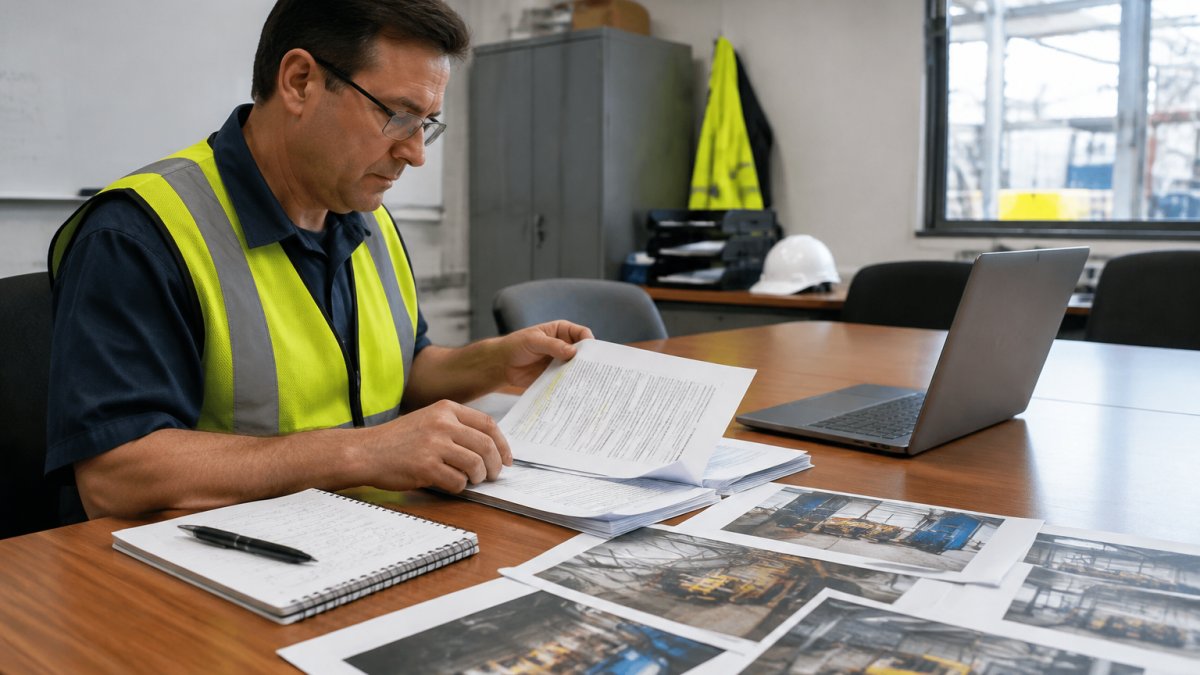
Preparation for a Cal/OSHA informal conference comes down to three moves: know the citation, organize your evidence by issue, and walk in with a written agenda and a short opening statement. Most employers skip the third step and lose the meeting as a result.
(/2026/11/05/essential-safety-records-cal-osha-inspections/) lists the documents inspectors typically review.
Step 2: Organize Evidence by Citation Issue
Group your evidence by citation item, not by document type. Each alleged violation gets its own folder or tab with the records that answer it.
A practical mapping looks like this:
- Alleged failure to train: training rosters with dates and signatures, lesson content, the employee’s acknowledgment form, and any refresher records.
- Alleged machine guarding or equipment condition: inspection photographs from the date of the visit, your own comparison photos, maintenance logs, and the equipment manual showing the guard configuration.
- Alleged missing written program: the program document itself, its revision date, distribution records, and evidence employees received it.
- Alleged hazard assessment gap: the assessment document, the date it was performed, and the person who performed it.
- Alleged repeat or willful classification: prior citation history, corrective action records, and evidence of the program changes made after the earlier citation.
- Witness or employee account: written statements, names and roles, and dates, organized so the District Manager can verify them.
What most guides miss is that a single well-organized binder beats a box of loose paper. The District Manager needs to follow your argument quickly, and an issue-by-issue tab structure does that work for you.
Step 3: Build Your Conference Agenda and Opening Statement
Write a one-page agenda. List each citation item, your position, and the outcome you want: withdrawal, downgrade, penalty reduction, or an abatement extension.
A short opening statement sets the tone. Something like: “Thank you for meeting. We’ve organized our materials by citation item.
Bring questions like these:
- “Which specific evidence supports this classification?”
- “Can this item be reclassified as a general violation?”
- “What abatement method would satisfy the standard?”
- “Is a penalty reduction available given our corrective action?”
- “Can the abatement date be extended to a realistic date?”
An agenda keeps the meeting on your issues. It also creates a record of what you raised, which matters when you send your written follow-up afterward.
Documents and Evidence to Bring to the Conference
Bring the citation, the inspection file, and evidence organized by citation item, plus proof of any corrective action already taken. The federal OSHA guidance on informal conferences confirms that documented good-faith correction is a factor employers can raise.
Your packet should include:
- The citation and Notice of Contest if filed.
- Inspection photographs and your own comparison photos.
- Employee training and maintenance records.
- Written safety programs and hazard assessments.
- Corrective action records with dates.
- A one-page summary of your position per item.
Bring two copies. One for the District Manager, one for you.
How to Negotiate Penalties, Classifications, and Abatement Terms
Negotiation works best when you separate the three issues: penalty amount, violation classification, and abatement terms. Concede nothing you can support with evidence, and lead with your strongest item.
On penalties, show documented good faith: corrected hazards, training completed, and a real safety program. On classification, focus on errors of fact or law.
On abatement, propose a realistic date and explain the operational reason. A reasonable extension you can actually meet beats a missed deadline.
For a deeper look at how penalty amounts and reduction criteria work, our Cal/OSHA citation and penalty guide explains the framework the district office applies.
Common Pitfalls That Weaken Your Position
The biggest mistake is treating the conference as a chance to vent rather than a negotiation. District Managers respond to evidence and specific requests, not frustration.
Watch out: arriving without an agenda or organized records signals that your position is weak, and the meeting often ends with the citation unchanged.
Other pitfalls to avoid:
- Missing the 15-working-day contest deadline.
- Arguing every item instead of the strongest few.
- Bringing no proof of corrective action.
- Promising abatement dates you cannot meet.
- Failing to put your requests in writing afterward.
A defense strategy built around your best items, supported by records, is what moves the District Manager. Our OSHA citation defense strategy tips cover the broader approach.
What Happens After the Conference: Documentation and Follow-Through
After the conference, send a written summary to the District Manager confirming what was discussed and any agreements reached. Verbal understandings fade; a written record does not.
Then track the outcome:
- Confirm any withdrawal, reclassification, or penalty change in writing.
- Calendar the revised abatement date.
- Complete corrective action and document it.
- Confirm whether your Notice of Contest is still needed.
Follow-through matters because the citation file stays open until abatement is verified. Miss the abatement date and you can face additional penalties.
Decide Whether to Accept, Negotiate, or Contest Your Citation
Use a simple decision framework. If the citation is factually correct and the penalty is fair, accept it and fix the hazard.
| Situation | Best Path |
|---|---|
| Citation is accurate, penalty fair | Accept and abate |
| Facts or classification are wrong | Negotiate at conference |
| Legal basis is flawed | Contest formally |
| Abatement date unrealistic | Request extension |
An informal conference can be a useful step for many employers because it is typically faster than a formal hearing.
A citation is a decision point, not a dead end. The employers who come out ahead are the ones who treat the informal conference as a prepared negotiation with organized records and a clear ask.
Frequently Asked Questions
How long does a Cal/OSHA informal conference take?
The length of an informal conference depends on the number of citations and the complexity of the issues. Conferences with multiple alleged violations, contested classifications, or extensive evidence review can take longer. The district manager sets the agenda, so a focused conference with a clear list of disputed items moves faster. Bring a written agenda and organized evidence to keep the discussion on track and avoid follow-up meetings.
Can a Cal/OSHA citation be changed after an informal conference?
Yes. The district manager can withdraw a citation, downgrade a violation classification, reduce penalties, or modify abatement dates based on the evidence presented. Any changes are documented in a written conference record. If no agreement is reached, the employer keeps the right to file a formal notice of contest within 15 working days of the citation. Get the outcome in writing and confirm which terms are binding before you leave.
What documents should I bring to a Cal/OSHA informal conference?
Bring the citation notice, inspection records, photographs of the cited conditions, training records, maintenance logs, and any corrective action documentation. Organize the materials by citation issue so each alleged violation has its own evidence packet. Include written safety programs, employee exposure records, and witness statements where relevant. A clear index helps the district manager follow your arguments and speeds up the review of each disputed item.
Is an informal conference the same as a Cal/OSHA hearing?
No. An informal conference is a meeting with the district manager to discuss and potentially resolve citations before a formal appeal. A hearing is a proceeding before the California Occupational Safety and Health Appeals Board, where an administrative law judge rules on the contest. The informal conference is faster and less formal, but it does not stop the 15-working-day deadline to file a notice of contest if you want to preserve your appeal rights.


Leave a Reply