Last Updated: October 31, 2026
Quick Summary
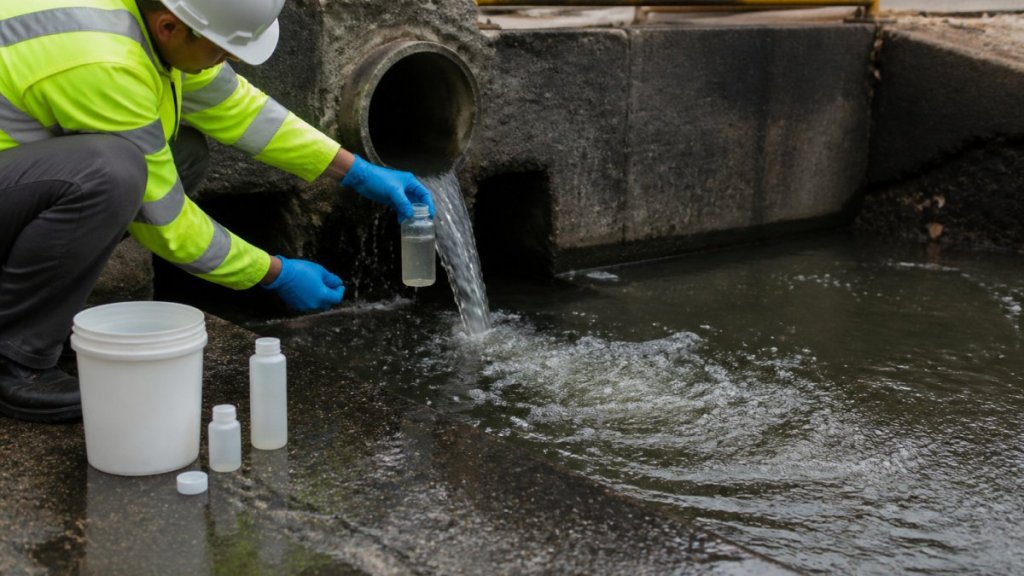
Industrial stormwater sampling is the process of collecting and testing rain runoff leaving a facility to check whether it carries pollutants into local waters. For many facilities it is a permit obligation, and grab samples taken during qualifying storm events are the most common method.
- Sampling is generally required when a facility holds stormwater permit coverage and discharges runoff to surface waters.
- Sampling is tied to qualifying storm events defined by the permit’s size and timing criteria.
- A grab sample is a single sample collected at one point in time from a discharge point.
- Samples must be taken from the outfall locations identified in the SWPPP, since wrong locations can invalidate results.
- Chain of custody and clear documentation keep sampling results defensible if they are questioned later.
Table of Contents
- Why Industrial Stormwater Sampling Matters
- Industrial Stormwater Permit Requirements and When Sampling Is Required
- Qualifying Storm Events, Sample Locations and Discharge Points
- Stormwater Grab Sample Procedure, Step by Step
- Sample Containers, Preservation and Chain of Custody
- Sampling Documentation and Recordkeeping Expectations
- Industrial Stormwater Monitoring: Handling Missed Events and Exceedances
- Scheduling a Sampling Service for Your Facility
- Frequently Asked Questions
Why Industrial Stormwater Sampling Matters
Industrial stormwater sampling is how a facility checks whether rain running off its property is carrying pollutants into local waters. For many facilities in California, that check is a permit obligation, not a courtesy.
Stormwater leaves a site quickly. It picks up oil, metals, sediment, and debris from yards, loading areas, and roofs, then flows to storm drains and receiving waters. Sampling turns that runoff into data a regulator can review. U.S. EPA overview of industrial stormwater permits
Industrial Stormwater Permit Requirements and When Sampling Is Required
Facilities that discharge stormwater to surface waters generally need coverage under an NPDES permit. Consult the current permit text for the coverage that applies to your facility.
Sampling requirements depend on the facility’s industry type, its discharge points, and the parameters it must monitor. A facility should confirm its schedule against the current permit text rather than relying on memory or a previous year’s plan. State Water Board Industrial General Permit
Qualifying Storm Events, Sample Locations and Discharge Points
Sampling is tied to qualifying storm events. A qualifying event is a rain event that meets the size and timing criteria set in the permit.
Sample locations should match the discharge points identified in the SWPPP. Each outfall, the point where stormwater leaves the site, is typically sampled at the location that best represents the runoff leaving the facility. Samples taken from the wrong place can invalidate results.
Stormwater Grab Sample Procedure, Step by Step
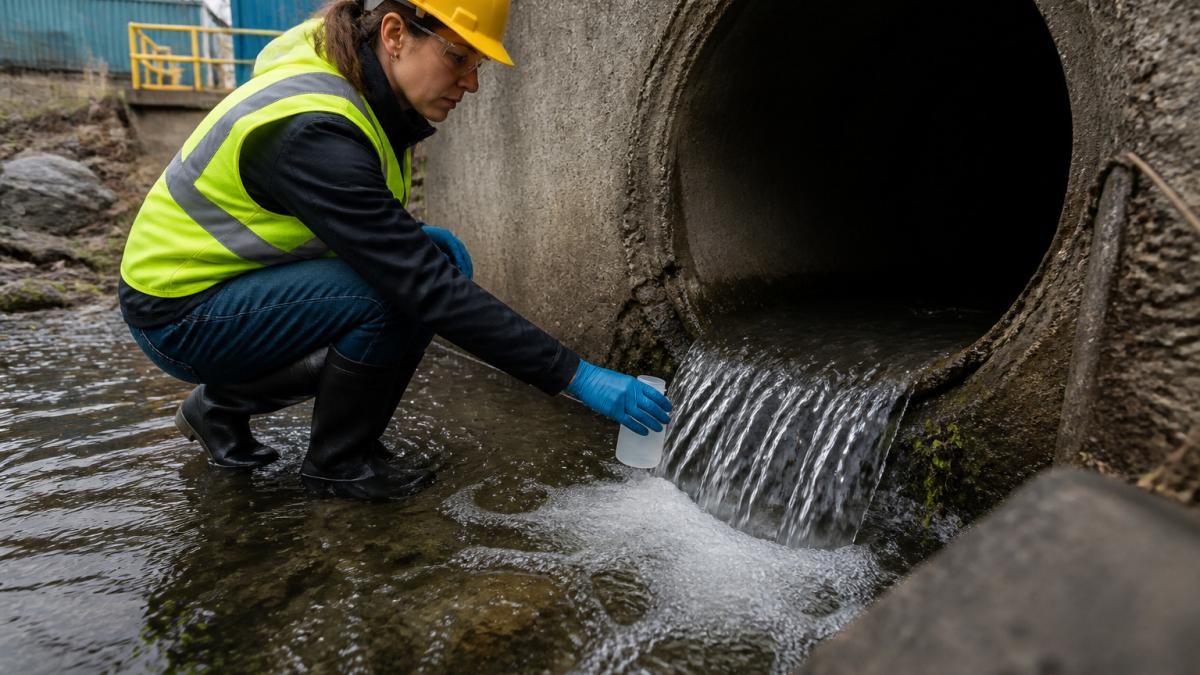
A grab sample is a single sample collected at one point in time. It is the most common method for industrial stormwater monitoring because it fits the permit’s storm-event timing and is quick to collect during a qualifying rain. The steps below describe a typical procedure, but the exact requirements come from your permit and your site-specific sampling plan, not from a generic checklist. For a deeper walkthrough, see how to conduct industrial stormwater sampling.
Build the sampling plan before the first storm
A site-specific plan is what separates a defensible sampling program from a scramble in the rain. Before the season starts, map the following for each outfall:
- Industrial activities in the drainage area. Material storage, loading docks, fueling areas, outdoor processing, and vehicle traffic each contribute different pollutants, which drives which parameters you monitor.
- Drainage area and flow path. Confirm which surfaces drain to which outfall, and whether run-on from off-site enters the system.
- Outfall identification. Match each discharge point to the SWPPP and to a photo, so a field crew can confirm the right location in the dark.
- Access and safety. Note locked gates, traffic exposure, steep channels, and confined-space concerns before the event, not during it.
- Parameter list and container matrix. Each analyte has its own bottle, preservative, and holding time; build a per-outfall container list so nothing is missed at 2 a.m.
The field procedure
- Confirm the qualifying event and timing. Check rainfall data against the permit’s qualifying criteria and the sampling window before traveling to the site. Log the rainfall source and reading.
- Gather equipment against the container matrix. Clean sample bottles, gloves, a field logbook, labels, a cooler with ice, chain-of-custody forms, and a calibration check for any field meter.
- Locate the designated outfall. Confirm it matches the SWPPP and the reference photo. If the outfall is dry or flow is insufficient, document it and follow the missed-event steps below rather than sampling a puddle.
- Collect the sample directly where possible. Fill the container with runoff, avoiding surface debris and sediment unless the parameter requires a whole-water sample. Do not sample standing water that is not discharging.
- Label, log, and preserve immediately. Record date, time, outfall, weather, rainfall, flow rate, and field observations. Add preservative only as the container and method require.
- Transport promptly. Deliver samples to a certified laboratory within the required holding time, with the cooler temperature documented.
Field notes matter. Record visible oil sheen, odor, color, foam, turbidity, and flow rate. These observations often explain lab results and support later reviews.
Photograph the outfall, the sample container label, and the flow at the time of collection. A timestamped photo set is the fastest way to defend a sample as representative if a result is questioned later.
When a sample is missed or invalid
Not every storm produces a usable sample. A dry outfall, unsafe access, a storm that never meets the qualifying criteria, insufficient flow, or a sample rejected by the lab all create a documentation problem that looks like a missed event on paper. Work through the same decision path each time:
- Dry weather or no discharge. Document the outfall condition with a photo and note the rainfall reading. No sample is collected because there is nothing to collect.
- Unsafe access. Do not put a crew in danger. Record the hazard, notify the responsible person, and resample at the next qualifying event if the permit allows.
- Missed qualifying storm. Record the reason, follow the permit’s notification steps, and review the plan so the next event is covered.
- Insufficient flow. Note the flow condition and whether the outfall was flowing at all; a trickle may not yield a representative sample.
- Lab-rejected sample. Keep the rejection notice, the chain-of-custody record, and the field notes together, and determine whether a resample is required.
In every case, the record should show what happened, why, and what was done next. An unexplained gap is harder to defend than a documented one.
Sample Containers, Preservation and Chain of Custody
Containers must be clean, suitable for the parameters being tested, and free of contaminants. Some analytes require preservatives added at the time of collection.
Chain of custody tracks each sample from collection to analysis. Every transfer should be signed and dated. A gap in the chain can make results difficult to defend, even when the data itself is accurate.
The table below summarises the key handling points covered in this section, so you can check each one at a glance.
| Topic | What the article says | Why it matters |
|---|---|---|
| Containers | Clean and suitable for the parameters | Avoids contamination |
| Preservatives | Added at collection for some analytes | Prevents changes before lab |
| Chain of custody | Signed and dated at every transfer | Keeps results defensible |
| Custody gaps | Can make results hard to defend | Accurate data may be challenged |
Sampling Documentation and Recordkeeping Expectations
Strong records make compliance easier. Maintaining these documents provides the necessary historical context for evaluating the effectiveness of infrastructure like a dry well when managing heavy rain.
Monitoring data is typically reported through the California Environmental Reporting System. Records should be retained for the period the permit requires, and staff should know where each file is stored. These records feed into the SWPPP annual reporting requirements in California that facilities must meet. California State Water Board reporting system
Industrial Stormwater Monitoring: Handling Missed Events and Exceedances
Missed events happen. A storm may arrive at night, a crew may be unavailable, or access to an outfall may be blocked.
An exceedance occurs when a result is above a benchmark or limit. The corrective actions that follow a stormwater exceedance are explained step by step in a separate article.
Watch out: an invalid sample, such as one taken outside the qualifying window or from the wrong outfall, can look like a missed event on paper. Confirm the sampling details before reporting.
Scheduling a Sampling Service for Your Facility
Many facilities hire outside help for sampling, especially when staff are stretched or when qualifying events fall outside normal working hours. The practical question is not just who can collect a bottle, but what the provider actually handles end to end. Comparing service scopes on that basis is the fastest way to avoid paying for collection while still owning the compliance work.
What a full-scope provider handles
A qualified service provider typically covers the full workflow, and the scope should be written into the agreement:
- Permit and SWPPP review. Confirm the facility’s coverage, outfalls, parameter list, and sampling schedule against the current permit text.
- Event monitoring. Track forecasted rain and rainfall data against the qualifying criteria, and mobilize when an event is likely to qualify.
- Field collection. Collect grab samples at the designated outfalls, with field observations, photos, and labels recorded at the time.
- Laboratory coordination. Deliver samples to a certified laboratory within holding time, manage chain of custody, and track results.
- Reporting and records. Compile lab reports, field logs, and rainfall records into a file the facility can use for reporting and review.
- Results follow-up. Review results against benchmarks, flag exceedances, and recommend corrective actions and resampling where required.
What drives the scope and effort
The effort behind a sampling program varies with a handful of site factors, and a written quote should reflect them rather than a flat per-sample figure:
- Number of outfalls. Each discharge point adds collection time, containers, and documentation.
- Parameter list. More analytes mean more bottles, more preservatives, and more laboratory work.
- Travel and site access. Remote sites, locked gates, and long drive times change mobilization cost.
- Event timing. Overnight and weekend events require standby coverage, which is a different service level than weekday collection.
- Reporting needs. Some facilities want raw lab reports; others want a compiled compliance file and a results review.
A vendor evaluation checklist
Use the same questions for every provider you compare:
- Are field staff trained on the permit’s qualifying-event criteria and grab-sample methods?
- Does the provider use an accredited laboratory, and can it show the accreditation?
- What does the field documentation package include, logs, photos, chain of custody, rainfall records?
- How are missed or invalid events handled, and who documents them?
- What is the response time for an event that qualifies overnight or on a weekend?
- Who reviews results with you, and what deliverables come with the report?
- Is the scope written down, including what is and is not included?
Ask for a written scope that lists each deliverable, permit review, event monitoring, collection, laboratory coordination, reporting, and results follow-up. A provider that can describe all six is easier to compare than one that quotes only per-sample collection.
Frequently Asked Questions
What is industrial stormwater sampling?
Industrial stormwater sampling is the collection of runoff from a facility’s discharge points during a qualifying storm event, so the water can be analyzed for pollutants covered by the facility’s permit. Under the applicable stormwater permit, facilities may be required to collect samples at specified outfalls and compare results to benchmark values. Samples are typically collected by trained staff or a qualified service provider, sent to an accredited laboratory, and the results are recorded in the facility’s stormwater documentation and reported as the permit requires.
When do industrial facilities need to collect stormwater samples?
Sampling timing depends on the permit a facility is covered under and the sampling schedule it sets. Most industrial general permits tie sampling to qualifying storm events, which are rainfall events that meet the size and timing criteria set in the permit. Facilities should confirm the exact event criteria, sampling frequency and required parameters in their permit and in any state-specific requirements that apply to their location.
How do you collect a stormwater grab sample?
A grab sample is collected by filling a clean, labeled container directly from the discharge at a specified sampling location during the first portion of the runoff, within the time window the permit allows. The sampler wears clean gloves, avoids touching the container opening, and records the date, time, location and observations such as color, odor and floating material. Samples are then preserved as required, kept cool, and delivered to the laboratory under chain of custody.
What should be included in stormwater sampling documentation?
Documentation generally includes the sampling date and time, the storm event details, the sample locations, the sampler’s name, field observations, the analytical parameters requested, and the chain-of-custody record. Facilities should also keep laboratory results, comparisons to benchmark values, any corrective actions taken after an exceedance, and records of missed or invalid sampling events with the reasons. Keeping these records organized makes permit reporting and inspections far easier.


Leave a Reply