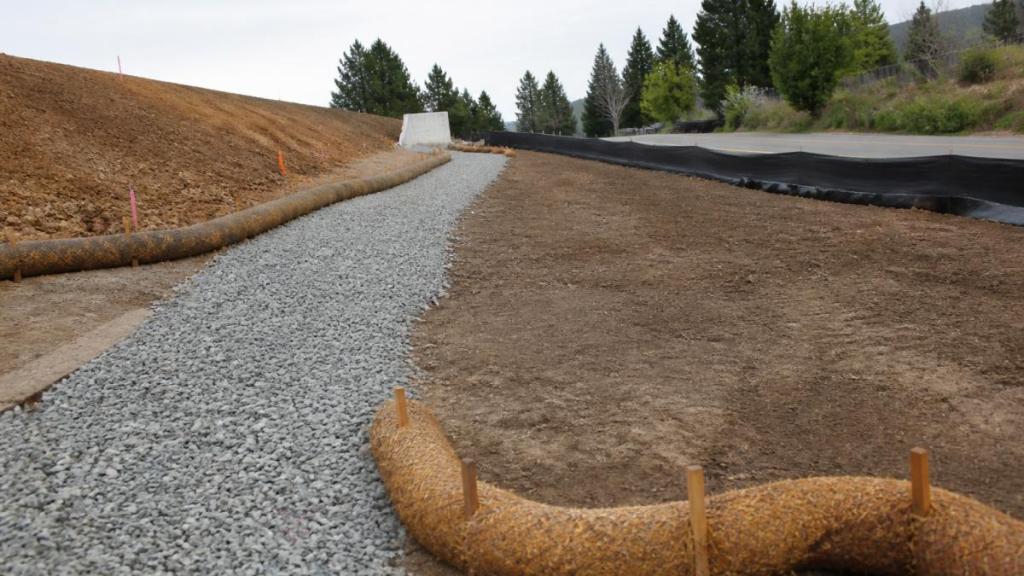
Table of Contents
- What Triggers SWPPP Compliance in California for 2026
- California Construction Stormwater Permit Coverage Explained
- QSD and QSP Roles in SWPPP Compliance
- California SWPPP Inspection Checklist: What to Verify
- California SWPPP Training Requirements for QSDs and QSPs
- California SWPPP Template: What Your Plan Must Contain
- Your 2026 SWPPP Compliance Calendar and NAL Response
- Frequently Asked Questions
Last Updated: October 7, 2026
What Triggers SWPPP Compliance in California for 2026
SWPPP compliance in California starts with one question: does your site disturb soil, or does your facility discharge stormwater? If the answer is yes, you likely need a Storm Water Pollution Prevention Plan, and 2026 brings renewed attention to getting the details right. At Michael Karl McNeil, we build and review these plans for construction and industrial sites, and the same gaps show up again and again.
A SWPPP is a site-specific plan that identifies pollutant sources, sets Best Management Practices, and maps out inspection, monitoring, and reporting duties under a State Water Resources Control Board permit.
Two separate permit systems drive most obligations. Construction sites disturb land. Industrial facilities expose materials to rain and runoff. Each has its own trigger, and mixing them up is the most common mistake we see.
The One-Acre Land Disturbance Threshold
Construction activity that disturbs one acre or more needs coverage under the Construction General Permit. Soil disturbance includes clearing, grading, excavation, and stockpiling. Sites under one acre can still qualify if they sit within a larger common plan of development that crosses the threshold.
Industrial Stormwater Permit Triggers
The Industrial General Permit applies to specific facility types by Standard Industrial Classification code, not by size. If your operations fall into a listed category and stormwater contacts exposed materials or industrial activity, you need coverage. A No Exposure Certification is the alternative when all materials and activities stay sheltered from rain and runoff.
| Site Type | Permit | Main Trigger |
|---|---|---|
| Construction | Construction General Permit | Disturbs one acre or more |
| Industrial | Industrial General Permit | Listed SIC code with exposure |
| Sheltered facility | No Exposure Certification | No exposure to stormwater |
California Construction Stormwater Permit Coverage Explained
Construction stormwater permit coverage begins with a Notice of Intent filed through SMARTS, the Water Board’s online system. The Notice of Intent registers your project, names your QSD, and assigns a risk level that shapes how much inspection and sampling the site needs.
Risk levels run from Level 1 to Level 3. Level 1 covers sites with low receiving-water risk. Level 2 applies to most projects. Level 3 covers sites discharging to sensitive waters, and it carries the tightest monitoring and reporting duties. The risk level is not permanent. It can change with site conditions, and a change in level changes your whole compliance calendar.
Notice of Intent, Risk Levels, and the SMARTS Workflow
The SMARTS workflow runs in a clear order:
- Register the project and file the Notice of Intent
- Upload the SWPPP and confirm the risk level
- Post notices and start inspections on schedule
- Submit sampling data and annual reports
- File a Notice of Termination when the site is stabilized
Skipping any step leaves a gap that shows up in the record. The California State Water Resources Control Board stormwater program publishes current forms, fees, and deadlines for each step.
QSD and QSP Roles in SWPPP Compliance
Two named roles carry the plan from paper to practice. A Qualified SWPPP Developer prepares and amends the plan. A Qualified SWPPP Practitioner carries out inspections, sampling, and field duties. One person can hold both roles if they meet the training and registration requirements for each.
The QSD owns the design. They pick the Best Management Practices, set the site map, and update the plan when conditions change. The QSP owns the field work. They inspect, sample, and log results, then flag anything that needs a corrective action. When those duties blur, records get thin and inspections get missed.
A plan signed by an unregistered QSD is not valid coverage. If your developer’s registration lapses mid-project, your inspections and reports lose their legal footing until a registered QSD takes over.
California SWPPP Inspection Checklist: What to Verify
A California SWPPP inspection checklist turns permit language into a walk-through you can repeat every visit. Inspectors look for the same things: working controls, clean records, and fixes that actually happened.
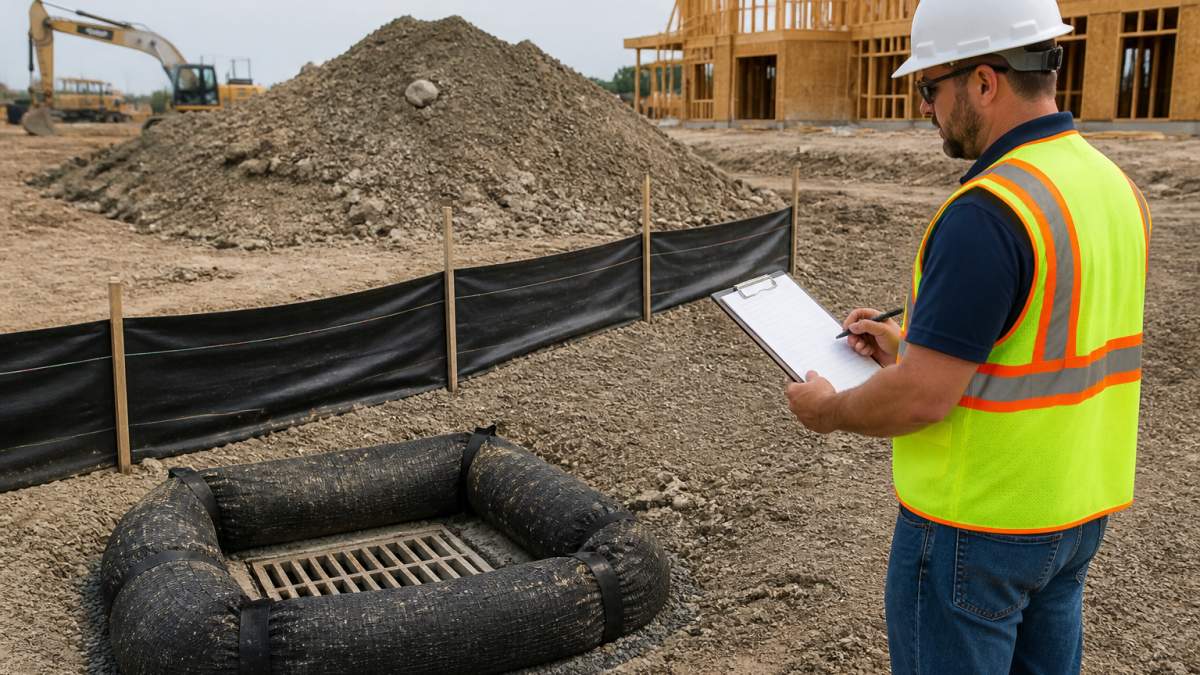
Here is what to verify on every inspection:
- Erosion control in place on all exposed slopes
- Sediment control devices intact and free of buildup
- Storm drain inlets protected and clear
- Good housekeeping around material and waste storage
- Site map matches current conditions
- Prior corrective actions completed
- Inspection log signed and dated
The checklist is only as good as the follow-through. Log every finding, set a fix date, and close it out in writing.
California SWPPP Training Requirements for QSDs and QSPs
California SWPPP training requirements set the bar for who can legally fill each role. The Water Board maintains a registry of qualified people, and both roles require completed training plus registration before you sign anything.
QSD training covers plan design, BMP selection, and risk-level assignment. QSP training covers inspection methods, sampling, and recordkeeping. Registrations carry renewal dates, so track them the same way you track permit deadlines. An expired registration is the same as having no qualified person on the job.
Build a simple tracker for every registered person on your project: name, role, registration number, and renewal date. Set a reminder 90 days out so a lapse never catches you mid-inspection cycle.
California SWPPP Template: What Your Plan Must Contain
A California SWPPP template gives you the required sections in order, but the content has to match your site. A generic plan pulled from the internet will fail review because it does not reflect your actual conditions.
Every plan needs these parts:
- Pollutant sources and site description
- Site map with drainage and discharge points
- Best Management Practices for each source
- Inspection and monitoring schedule
- Sampling and analytical methods
- Corrective action and adaptive management steps
- Training and recordkeeping duties
- Names of the QSD and QSP
The site-specific details are what separate a passing plan from a rewrite. Your map, your sources, your controls.
Your 2026 SWPPP Compliance Calendar and NAL Response
A 2026 compliance calendar keeps the year from sneaking up on you. Most violations reviewed in the field are not deliberate. They are missed dates, thin records, and exceedances that were never formally closed out. The calendar below separates construction and industrial obligations so you can see which dates apply to your permit type.
2026 Construction General Permit Calendar
| Timing | Task | Permit Basis |
|---|---|---|
| Before any ground disturbance | File Notice of Intent through SMARTS, post SWPPP and NOI at the site, confirm risk level | CGP |
| Before ground disturbance | Hold pre-construction meeting with QSD, QSP, and grading contractor | CGP |
| Ongoing | Routine inspections at the frequency set by risk level (Level 1 monthly, Level 2 weekly, Level 3 twice weekly plus pre-storm) | CGP |
| Before each forecasted storm event | Pre-storm inspection and BMP verification | CGP |
| Within 48 hours after each storm event | Post-storm visual observation and log entry | CGP |
| Quarterly (Level 2 and 3) | Stormwater sampling and laboratory analysis for permit-listed parameters | CGP |
| Annually by September 1 | Submit annual report through SMARTS and pay the annual fee | CGP |
| At project end | Stabilize disturbed soil, then file Notice of Termination | CGP |
2026 Industrial General Permit Calendar
| Timing | Task | Permit Basis |
|---|---|---|
| Before coverage | File Notice of Intent through SMARTS or submit a No Exposure Certification if all materials are sheltered | IGP |
| Ongoing | Quarterly visual observations of each discharge location | IGP |
| Twice per year | Collect and analyze samples from each qualifying discharge location for permit-listed parameters | IGP |
| Annually by July 1 | Submit annual report through SMARTS and pay the annual fee | IGP |
| Annually | Review and update the SWPPP to reflect current site conditions | IGP |
| At facility closure | File Notice of Termination | IGP |
NAL Exceedance Response: A Decision Tree
Sampling results are compared to Numeric Action Levels, or NALs. An exceedance means a result came in above the NAL for a given pollutant. The response is not panic; it is a documented sequence. Work through these steps in order and keep a written record at each stage.
- Confirm the result. Check the laboratory report for holding times, detection limits, and any qualifiers. A result flagged as estimated or affected by a matrix interference may need re-analysis before you treat it as an exceedance.
- Classify the exceedance. Determine whether it is a Level 1 (single parameter, single event) or Level 2 (same parameter in two consecutive sampling events, or a Level 1 that recurs). The classification drives how much investigation and reporting is required.
- Investigate the source. Walk the drainage area that contributed to the sample. Look for exposed materials, failed BMPs, unauthorized discharges, or changes in industrial activity since the last sampling event.
- Select corrective actions. Choose BMPs that address the specific pollutant and source. For sediment, that may mean additional perimeter controls or inlet protection. For metals or organics, that may mean covering exposed stockpiles, secondary containment, or treatment.
- Document the response. Record the exceedance date, parameter, result, source investigation findings, corrective actions taken, and the date each action was completed. Attach the laboratory report and any photos.
- Schedule follow-up monitoring. The next sampling event must confirm whether the corrective action worked. If the same parameter exceeds again, the exceedance escalates and the investigation deepens.
An exceedance that is not documented with a source investigation and corrective action reads as an unaddressed violation during an inspection. The paper trail is the defense.
The U.S. Environmental Protection Agency stormwater rules and the California State Water Resources Control Board SMARTS portal are the primary sources to verify current deadlines and thresholds before you file.
Most SWPPP violations trace back to missed dates and thin records, not bad intentions. A calendar that separates construction from industrial obligations, plus a written NAL response sequence, prevents the majority of enforcement problems.
Frequently Asked Questions
What triggers a SWPPP in California?
A SWPPP is triggered when construction activity disturbs one acre or more of soil, or is part of a larger common plan of development that reaches that threshold. Industrial facilities need one when their sector is listed under the Industrial General Permit and they discharge stormwater associated with industrial activity. The plan documents pollutant sources, Best Management Practices, and inspection duties, and must be prepared by a Qualified SWPPP Developer before permit coverage begins.
How often is SWPPP training required?
California SWPPP training requirements mean the QSD who prepares the plan and the QSP who runs day-to-day compliance must hold current, State Water Resources Control Board-recognized certifications. There is no fixed annual refresher mandated by the permit itself, but certifications carry expiration dates and must stay valid for the project’s duration. Site staff who handle BMPs or conduct inspections need documented training before they take on those duties.
What should a SWPPP inspection checklist include?
A California SWPPP inspection checklist should cover erosion control, sediment control, tracking control, and good housekeeping at each active area. Inspectors verify BMP condition, check discharge points and receiving water for visible pollutants, note any non-stormwater flows, and record corrective actions with deadlines. Qualified personnel, not just any staff member, must perform the inspection. Completed checklists become part of the project record and support annual reporting.
How do I determine whether a construction project needs coverage under California’s Construction General Permit?
Start with the land disturbance area. If soil will be disturbed on one acre or more, or the site is part of a common plan of development that reaches one acre, Construction General Permit coverage applies. Confirm the project’s risk level, since it drives monitoring and reporting frequency. Then file a Notice of Intent through SMARTS before ground disturbance begins, and plan for a Notice of Termination once the site is stabilized and coverage is no longer needed.


Leave a Reply