Table of Contents
- What Industrial Hygiene Monitoring Involves
- Common Workplace Hazards Small Businesses Face
- OSHA Industrial Hygiene Requirements You Need to Know
- Building a Workplace Hazard Assessment Checklist
- When to Bring In an Industrial Hygiene Consultant
- Budget-Friendly Monitoring Tools and How to Read the Data
- Frequently Asked Questions
Last Updated: September 16, 2026
What Industrial Hygiene Monitoring Involves
Industrial hygiene monitoring is the systematic process of anticipating, recognizing, evaluating, and controlling workplace conditions that can cause injury, illness, or impaired health among workers. This guide from Michael Karl McNeil covers what small business owners need to know before an inspector walks through the door.
The Four-Step Process: Anticipate, Recognize, Evaluate, Control
Every credible industrial hygiene program follows the same arc.
- Anticipate hazards before they cause harm by reviewing processes, materials, and equipment during planning.
- Recognize what’s actually present: which chemicals, noise sources, dusts, or ergonomic stressors exist in your operation.
- Evaluate exposure through observation, sampling, and comparison against established limits.
- Control the hazard using the hierarchy of controls, starting with elimination and engineering before relying on personal protective equipment.
What most guides miss is that steps one and two cost almost nothing. A supervisor who understands the process can often flag the biggest risks during a walkthrough. The expensive part, sampling and lab analysis, comes later and only where it’s warranted.
Common Workplace Hazards Small Businesses Face
Most small operations carry the same handful of exposures, and they’re rarely exotic.
Chemical, Physical, Biological, and Ergonomic Stressors
- Chemical contaminants: solvents, adhesives, welding fumes, cleaning agents, and dusts from cutting or grinding.
- Physical hazards: noise, vibration, heat stress, and radiation sources.
- Biological stressors: mold, bacteria in water systems, and waste handling exposures.
- Ergonomic stressors: repetitive motion, awkward postures, and manual lifting.
A common mistake is assuming that because a shop is small, exposures are small too. A single poorly ventilated finishing room can produce higher solvent concentrations than a large plant with proper ventilation systems. Size doesn’t determine risk; process and airflow do.
OSHA Industrial Hygiene Requirements You Need to Know
OSHA does not publish a single “industrial hygiene rule.” Instead, obligations are scattered across substance-specific standards, each with its own permissible exposure limits (PELs), monitoring triggers, and recordkeeping duties. For a small shop, the practical question is not “which regulation applies to me” in the abstract, it is “which of the substances and stressors I actually use have a standard attached.”
The Standards That Most Often Apply to Small Operations
A handful of substance-specific standards cover the majority of small-shop exposures:
- Noise (29 CFR 1910.95): A hearing conservation program is triggered when employees’ exposure equals or exceeds an 8-hour time-weighted average of 85 dBA. That program includes monitoring, audiometric testing, hearing protection, and training. At 90 dBA, feasible engineering or administrative controls are required.
- Respirable crystalline silica (29 CFR 1910.1053): Common in concrete cutting, stone work, and foundry operations. The standard sets an action level of 25 micrograms per cubic meter as an 8-hour TWA and a PEL of 50. Exposure above the action level triggers monitoring and medical surveillance duties.
- Lead (29 CFR 1910.1025): Frequent in radiator repair, battery work, and some painting. The action level is 30 micrograms per cubic meter as an 8-hour TWA; the PEL is 50. Above the action level, monitoring, medical surveillance, and hygiene facilities kick in.
- Hexavalent chromium (29 CFR 1910.1026): Welding on stainless steel and chrome plating are the usual sources. The action level is 2.5 micrograms per cubic meter as an 8-hour TWA; the PEL is 5.
- Formaldehyde (29 CFR 1910.1048): Found in some adhesives, resins, and embalming operations. The action level is 0.5 ppm as an 8-hour TWA; the PEL is 0.75.
- Hazard communication (29 CFR 1910.1200): Not a monitoring standard, but it requires written programs, labels, safety data sheets, and training for every hazardous chemical in the workplace, the foundation most other obligations rest on.
What the Monitoring Triggers Actually Require
When a standard’s action level is met or exceeded, the typical sequence is:
- Initial monitoring to determine actual exposure.
- Periodic monitoring on a schedule the standard sets, often every six months or every two years, depending on the substance.
- Notification of employees of their results, in writing, within a set window (often 15 working days).
- Recordkeeping of monitoring results, often for 30 years for exposure records under 29 CFR 1910.1020.
State-Plan States Add a Layer
About half the states operate their own OSHA-approved plans. These must be at least as effective as federal rules, and many go further, lower PELs, additional substances, or shorter monitoring intervals. If you are in a state-plan state, check your state agency’s requirements on top of the federal ones. The OSHA employer responsibilities overview is the right starting point for confirming which standards apply to your operation.
Skipping exposure monitoring because “nobody has gotten sick” is not a defense. OSHA can cite under the General Duty Clause for recognized hazards even where no specific standard sets a limit, and the citation typically lands after an incident, not before. The cheapest time to build the record is before anyone asks for it.
A Small-Shop Compliance Checklist
- Inventory every hazardous chemical and pull its safety data sheet
- Match each chemical and physical stressor against a substance-specific standard
- Identify which standards carry an action level and whether you are likely above it
- Confirm your state-plan status and any stricter state limits
- Set a monitoring calendar for any standard with periodic requirements
- Store monitoring results, calibration records, and notifications together
Building a Workplace Hazard Assessment Checklist
A workplace hazard assessment checklist is a written, repeatable tool that walks a supervisor through each area of the facility, records what’s observed, and flags items needing sampling or correction. It’s the difference between a one-time inspection and an actual program.
Walkthrough, Sampling Strategy, and Data Validation
Build your checklist around these stages:
- List every work area, process, and chemical used, including maintenance and cleaning tasks
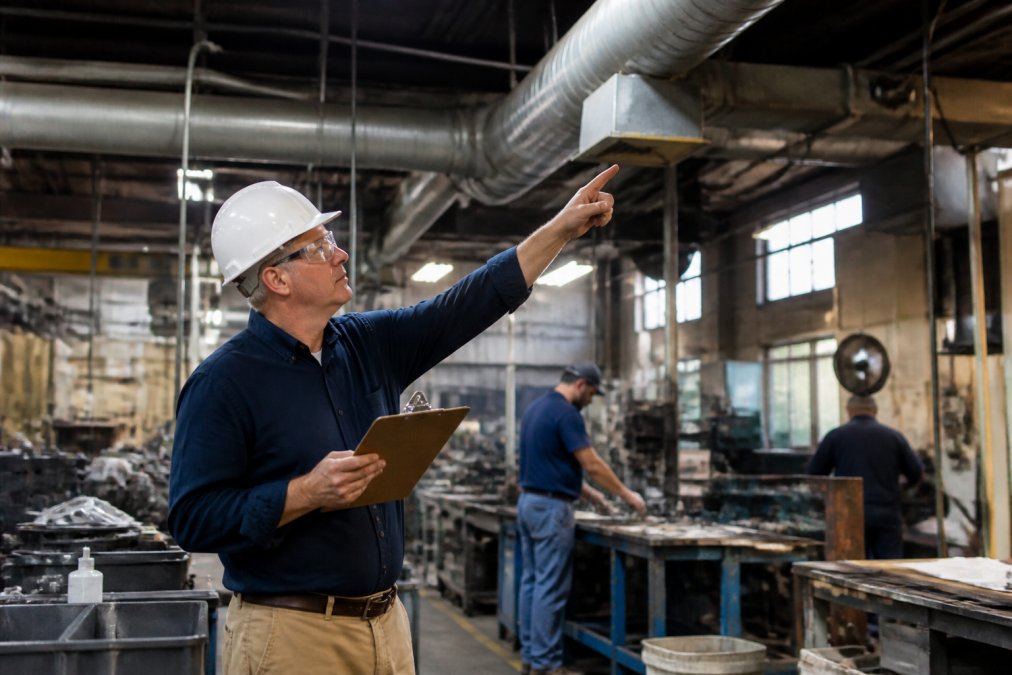
- Note visible dust, mist, fume, or odor, and where ventilation systems discharge
- Record noise levels during normal operations, not just at idle
- Identify who works in each area and for how long per shift
- Flag tasks with awkward posture, heavy lifting, or high repetition
- Mark each item as controlled, needs improvement, or needs sampling
When to Bring In an Industrial Hygiene Consultant
Most small-business guides treat this as a yes-or-no question. It is really a build-versus-buy decision, and the right answer depends on what you are trying to produce: a defensible record, a first-pass picture, or a control solution.
What You Can Reasonably Do In-House
A trained supervisor can handle the front end of the process without outside help:
- Walkthroughs and hazard inventories
- Written hazard communication programs and safety data sheets
- Noise surveys using a calibrated sound level meter for a rough picture
- Ventilation checks with a smoke tube or anemometer
- Documenting controls already in place
The Build-vs-Buy Decision
Bring in a qualified industrial hygienist when any of these is true:
- A substance-specific standard requires monitoring you have not done. The recordkeeping and notification duties are unforgiving, and a missed interval is easy for an inspector to spot.
- You are facing a citation, an incident, or a workers’ compensation claim. At that point the question is not whether to sample but whether the sampling will survive scrutiny.
- A hazard spans multiple standards. Welding on stainless steel, for example, can implicate hexavalent chromium, welding fumes, noise, and radiation at once, a credentialed professional can scope it correctly the first time.
- You need to demonstrate a control works. Post-control sampling to show an engineering change brought exposure below the action level is a common reason small shops call in help.
- Your insurer or a client is asking for documentation. A written report from a qualified hygienist is often the fastest path to closing that request.
What a Credentialed Industrial Hygienist Actually Delivers
The value is not the sampling itself, it is the defensibility of the record. A qualified professional brings:
- Sampling that follows recognized methods (NIOSH, OSHA, or ASTM)
- Calibration and chain-of-custody documentation
- Interpretation tied to the correct limit and averaging period
- A written report you can hand to a regulator, an insurer, or a client without apologizing for it
The Middle Path
Before you call anyone, write down three things: the substance or stressor you are worried about, the task and duration that produces the exposure, and what you have already done to control it. A hygienist can scope the work far faster, and often more cheaply, when those three answers are already on the table.
Michael Karl McNeil, a Registered Industrial Hygiene Professional and former Fire Battalion Chief, works with small and mid-sized operations on exactly these situations: exposure monitoring, written safety programs, and Cal/OSHA citation defense. The value of a credentialed industrial hygienist is a defensible record, sampling that follows recognized methods, and an interpretation you can hand to a regulator or an insurer without apologizing for it.
Budget-Friendly Monitoring Tools and How to Read the Data
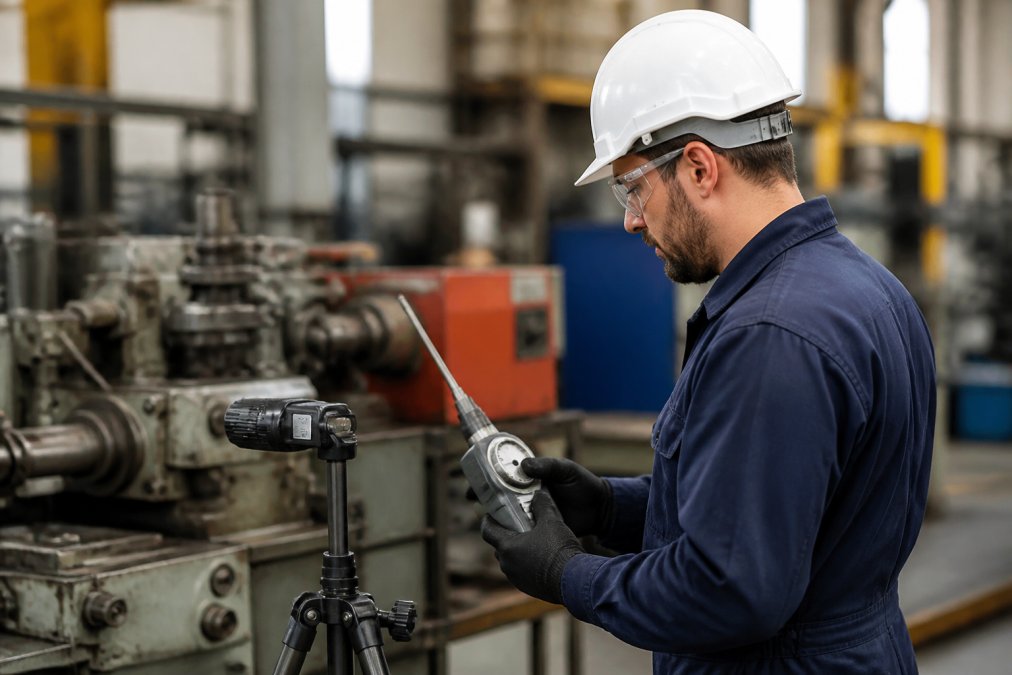
You don’t need a full laboratory budget to start. Direct-reading instruments, noise dosimeters, and basic ventilation checks can give you a first-pass picture of where problems concentrate.
| Tool | What It Tells You | Best For | Limitation |
|---|---|---|---|
| Noise dosimeter | Full-shift personal noise exposure | Any shop with loud equipment | Needs calibration and correct placement |
| Direct-reading gas meter | Real-time concentration of specific gases | Confined spaces, solvent use | Only reads what it’s calibrated for |
| Air sampling pump with media | Time-weighted average exposure | OSHA compliance sampling | Requires accredited lab analysis |
| Smoke tube or anemometer | Airflow direction and velocity | Checking ventilation systems | Doesn’t measure contaminant concentration |
Calibrate before and after every sampling event and keep both records. A result without a post-calibration record is easy to challenge, and labs will reject samples that arrive without the documentation.
Frequently Asked Questions
What does industrial hygiene monitoring involve for small businesses?
It starts with a walkthrough to identify chemical, physical, biological, and ergonomic hazards. You then evaluate exposure through air sampling, noise dosimetry, or wipe tests, compare results against OSHA permissible exposure limits, and apply controls. For a small business, this can be a focused effort on the two or three highest-risk tasks rather than a full facility-wide study.
Which OSHA standards apply to industrial hygiene monitoring?
The general duty clause requires a workplace free from recognized hazards. Specific standards cover air contaminants, respiratory protection, noise, ventilation, and personal protective equipment. Small businesses should start with the standards tied to their industry, then build a workplace hazard assessment checklist around those requirements to stay compliant without overextending resources.
How do I identify workplace health hazards without a full-time safety officer?
Use a simple workplace hazard assessment checklist during regular walkthroughs. Note visible dust, fumes, loud equipment, repetitive motions, and chemical storage areas. Talk to workers about symptoms like headaches or fatigue. For anything that needs measurement, a budget-friendly air quality monitor or noise meter can give you a starting point before you decide whether to bring in an industrial hygiene consultant.
How often should small businesses conduct air quality or noise monitoring?
Monitor whenever you change processes, add new chemicals, or bring in new equipment. Otherwise, an annual check is a reasonable baseline for most small operations. If a worker reports symptoms or you fail a compliance inspection, monitor immediately. Keep records of every result so you can show a pattern of due diligence to OSHA and your insurance carrier.
 Michael Karl McNeil
Leave a comment