Quick Summary
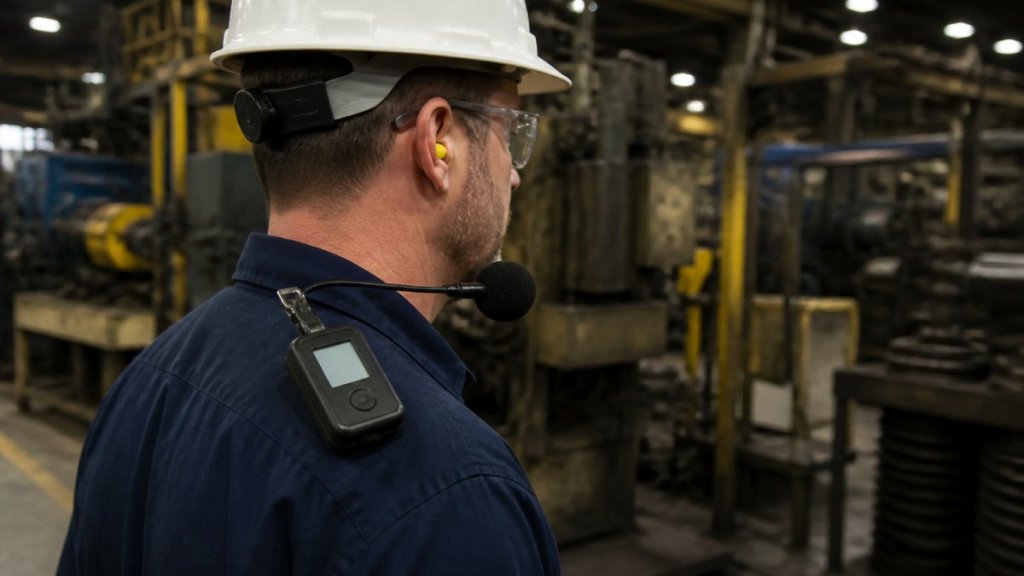
A noise dosimeter is a wearable instrument a worker carries through a full shift to record cumulative sound exposure. Unlike a fixed sound level meter, it captures the personal exposure dose that OSHA compliance and hearing conservation programs are built around.
- Use a sound level meter to survey a room or identify a noise source, and a dosimeter to measure people.
- OSHA permissible exposure limits are expressed as a time-weighted average over an 8-hour shift.
- A one-second logging interval captures short impact events that a one-minute interval averages away.
- Check the instrument with an acoustic calibrator before and after each monitoring session.
- Match the instrument configuration to your monitoring cadence and team size before comparing specifications.
Table of Contents
- Why Noise Dosimeters Matter for Industrial Safety
- Noise Dosimeter vs Sound Level Meter: Which Do You Need?
- Comparison Table: Top Noise Dosimeters for Industrial Use
- Selection Criteria: Specifications That Actually Matter
- OSHA Noise Dosimeter Requirements and Compliance
- Noise Dosimeter Calibration and Field Quality Assurance
- Choosing Your Next Workplace Noise Monitoring Equipment
- Frequently Asked Questions
9 Best Noise Dosimeters for Industrial Safety
Last Updated: November 1, 2026
Why Noise Dosimeters Matter for Industrial Safety
Noise-induced hearing loss is permanent, and it is one of the most common occupational hazards on manufacturing floors. A facility often assumes its noise is “manageable” until a measurement shows otherwise. A noise dosimeter is the instrument that replaces that assumption with a measured record of what each worker actually absorbs over a shift.
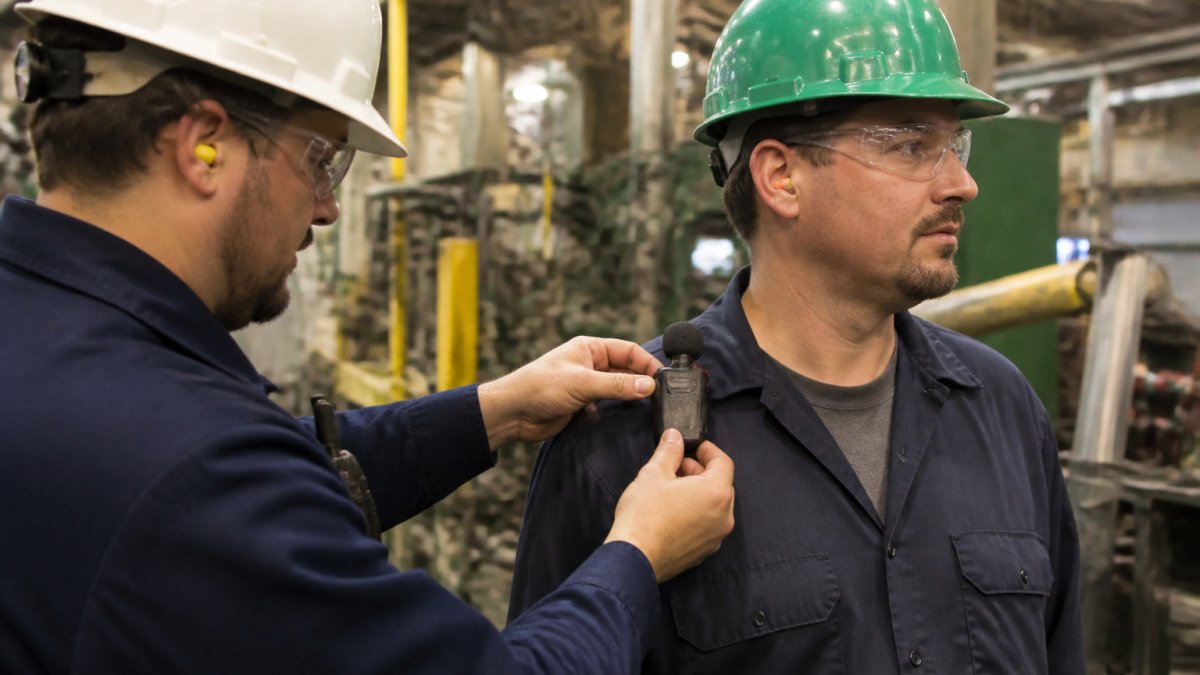
A noise dosimeter is a wearable instrument that a worker carries through a full shift to record cumulative sound exposure. Unlike a fixed monitor, it follows the person, so it captures time spent near machinery, in loading areas, and in quieter zones alike. The result is a personal exposure dose, which is what regulators and hearing conservation programs are built around.
Good dosimetry gives safety managers three things. It shows whether a worker exceeds the OSHA action level. It identifies which tasks or areas drive the exposure. And it provides defensible documentation if an inspector or a claim later asks what the workforce was exposed to. Without that data, decisions about engineering controls, hearing protection, and job rotation are guesses.
Noise Dosimeter vs Sound Level Meter: Which Do You Need?
A sound level meter measures noise at one point in time or at one location. A noise dosimeter integrates noise over time for a specific person (the CDC). For occupational exposure assessment, the dosimeter is usually the right tool, because OSHA’s permissible exposure limits are expressed as a time-weighted average over an 8-hour shift.
Use a sound level meter when you need to map a room, identify a noise source, or check whether a piece of equipment is loud enough to warrant further study. Use a noise dosimeter when you need to know what a worker experiences over a full shift. Many programs use both: the sound level meter to survey the area, and dosimeters to measure the people working in it.
Comparison Table: Top Noise Dosimeters for Industrial Use
Most ranking pages describe dosimeter categories in prose and never put the trade-offs side by side. The table below compares the four instrument configurations industrial buyers actually choose between, so you can match a configuration to your workforce instead of guessing from a datasheet.
| Configuration | Typical Measurement Range | Logging and Memory | Connectivity | Battery Life | Calibration Approach | Best Fit |
|---|---|---|---|---|---|---|
| Basic clip-on dosimeter | Roughly 70-140 dB, A-weighted with C-weighted peak | Fixed-interval logging, limited on-board memory | USB download after the shift | Single shift to multi-shift on one battery | Acoustic calibrator before and after each session | Small teams running quarterly surveys |
| Cable-free shoulder-mounted dosimeter | Same range with wider dynamic span | Configurable intervals down to one second | Bluetooth or docking cradle | Multi-shift, rechargeable | Field calibrator plus periodic lab service | Manufacturing floors with rotating job assignments |
| Dosimeter with integrated sound level meter mode | Full range plus spot-check level mode | Interval logging plus time-history | USB and Bluetooth | Multi-shift | Field calibrator plus periodic lab service | Programs that survey areas and people with one instrument |
| Intrinsically safe / ruggedized dosimeter | Range as above, hardened housing | Interval logging, event markers | Docking station or USB | Multi-shift | Field calibrator plus periodic lab service | Construction, utilities, and combustible-dust environments |
Three trade-offs drive most of the decision. First, memory and logging interval: a one-second interval captures short impact events that a one-minute interval averages away, but it fills memory faster and produces larger files to analyze. Second, connectivity: USB-only download is fine for a handful of units but becomes a bottleneck when you deploy twenty dosimeters across three shifts. Third, calibration path: instruments that accept a standard acoustic calibrator let you document pre- and post-use checks in-house, while models with proprietary calibration docks push that work to a service schedule.
Confirm current specifications, supported standards, and accessory compatibility directly with each manufacturer before purchase, because model lines and firmware change. The point of this table is to frame the questions you ask, not to substitute for the datasheet.
Before comparing models, write down your logging interval, number of simultaneous workers, and download workflow. Those three answers eliminate most of the field before you read a single specification.
Selection Criteria: Specifications That Actually Matter
Not every specification on a datasheet affects field results. Focus on the ones that change your data quality and your workflow.
Standards compliance. Confirm the instrument is designed to meet the relevant noise measurement standards. For a step-by-step procedure for conducting workplace noise dosimetry that helps ensure valid readings, see the guide. Instruments that do not are harder to defend if your results are challenged.
Dose versus level reporting. Make sure the device reports dose as a percentage of the allowable exposure and time-weighted average, not only raw decibel readings. OSHA compliance is calculated from dose.
Microphone placement. Confirm the instrument supports the placement your program requires, typically near the ear on the shoulder. Placement errors are a common source of misleading data.
Battery life and logging interval. A dosimeter must run a full shift, and often longer. Check that logging intervals are fine enough to capture short high-noise events.
Ruggedness and environment. Dust, humidity, and impact resistance matter on construction and heavy manufacturing sites.
OSHA Noise Dosimeter Requirements and Compliance
OSHA’s noise standard for general industry, 29 CFR 1910.95, sets an action level and a permissible exposure limit that employers must measure against. When worker exposure reaches the action level, the standard requires a hearing conservation program, including monitoring, audiometric testing, training, and hearing protectors. Personal dosimetry is one of the most direct ways to demonstrate that monitoring has been done. Confirm current limits and requirements against the regulation itself, since your facility’s obligations depend on its specific operations. Our guide to seven steps to achieve OSHA regulatory compliance walks through the obligations in order.
OSHA Occupational Noise Exposure standard 29 CFR 1910.95
Keep records of each monitoring event, including the date, the worker, the instrument used, the calibration status, and the resulting dose. Organized records are often what separate a routine inspection from an extended citation dispute.
Noise Dosimeter Calibration and Field Quality Assurance
A dosimeter is only as good as its last calibration. Most instruments should be checked with an acoustic calibrator before and after each monitoring session, and the instrument should be sent for periodic laboratory calibration on the schedule the manufacturer and your program specify. Document both checks.
Field quality assurance also means positioning the microphone correctly, protecting it from wind and contact, and noting any events that could affect the reading, such as a worker removing the device or a nearby impulse source. Data affected by these issues should be flagged, not silently included.
NIOSH criteria for a recommended standard on occupational noise exposure
Choosing Your Next Workplace Noise Monitoring Equipment
Before you buy, define what you need the equipment to do. A small team checking a few workers each quarter has different needs from a plant running continuous monitoring across several shifts. The shortlist below organizes the decision by team size and monitoring cadence, which is the gap most ranking pages leave open.
Small teams, occasional surveys. If you monitor a handful of workers a few times a year, a basic clip-on dosimeter with USB download and a single acoustic calibrator covers the job. Buy two units so one can be calibrated while the other is in the field, and keep the calibration records with the exposure records.
Mid-size programs, rotating assignments. When workers move between areas and shifts, cable-free shoulder-mounted dosimeters with configurable logging intervals and docking-station downloads pay for themselves in staff time. Budget for a docking cradle and the reporting software, not just the instruments.
Multi-shift plants, continuous monitoring. Plants running dosimeters across several shifts need enough units to cover simultaneous workers plus a spare, a download workflow that does not depend on one person, and software that produces per-worker exposure records on a schedule. Robust data management becomes even more critical when these monitoring protocols must align with the broader framework of industrial demolition safety.
Construction, utilities, and hazardous environments. Intrinsically safe and ruggedized dosimeters are the starting point, not an upgrade. Confirm the rating matches the environment and that accessories such as windscreens and mounting clips are rated for the same conditions.
Whatever the tier, build the data workflow before the first measurement. Decide how each dosimeter is assigned to a worker, how the download is labeled, where the calibration certificate is stored, and who reviews the dose result against the OSHA action level. A common pattern is to keep a monitoring log that records the date, the worker, the instrument serial number, the calibration status, and the resulting dose, because that log is what turns raw files into a defensible exposure record.
Also weigh whether internal staff or an outside professional should run the monitoring. Industrial hygiene expertise helps with survey design, instrument selection, and interpreting results. Read about hiring an industrial hygienist for a small business to compare options. For facilities that need that support, industrial hygiene monitoring services are available from McNeil Safety Consulting.
A practical approach is to start with a written monitoring plan, select instruments that meet the standards above, and build calibration and documentation into the routine from day one. Equipment that is well chosen but poorly maintained will not produce data you can rely on.
Match the instrument configuration to your monitoring cadence and team size first, then compare specifications within that tier. The reporting workflow and calibration routine decide whether the data survives an inspection, not the datasheet.
Frequently Asked Questions
What is a noise dosimeter used for?
A noise dosimeter is a wearable instrument that records a worker’s personal noise exposure over a full shift. Unlike a fixed sound meter, it follows the worker through changing locations and tasks, accumulating a dose value that shows how much of the permissible exposure has been used. Safety teams use these readings to determine whether hearing conservation measures such as engineering controls, administrative changes or hearing protection are needed. Results are typically compared against OSHA’s permissible exposure limit of 90 dBA as an 8-hour time-weighted average, with an action level of 85 dBA, under 29 CFR 1910.95. Because the device captures the whole shift, it reflects real cumulative exposure rather than a single snapshot.
What is the difference between a noise dosimeter and a sound level meter?
A sound level meter measures sound pressure at a single point and time, which makes it useful for surveying a room, identifying noise sources or checking a fixed location. A noise dosimeter is worn by a person and integrates sound energy over an entire work shift, producing a dose percentage and a time-weighted average. Many industrial safety programs use both: sound level meters to map areas and identify hazards, and noise dosimeters to document each worker’s actual exposure. Choosing between them depends on whether you need a location picture or a personal exposure record.
How often does a noise dosimeter need calibration?
Noise dosimeters should be checked with an acoustic calibrator before and after each measurement session, and returned to the manufacturer or an accredited lab for periodic full calibration, commonly on an annual schedule. Field checks confirm the instrument responds correctly at a known reference level, typically 94 dB or 114 dB. Keeping calibration certificates and pre- and post-check logs supports the reliability of your exposure data and is useful documentation if results are ever challenged. Consult the manufacturer’s manual for the exact interval and procedure for your model.
What features should you compare when choosing an industrial noise dosimeter?
Start with the measurement standard the device meets, such as ANSI S1.25 or IEC 61252, and confirm it supports the OSHA criterion and exchange rate you need. Compare the dynamic range, microphone placement options, data logging interval, battery life for a full shift, and whether the unit is cable-free and lightweight enough to avoid interfering with work. Review data download and reporting software, since some systems integrate with exposure records more easily than others. Also check the calibration support available from the vendor and the total cost of ownership, including calibrators, replacement parts and service.


Leave a Reply