
Table of Contents
- Why Small Manufacturers Need Safety Consulting
- What a Safety Consultant Actually Does on Your Floor
- OSHA Compliance for Small Manufacturers: What Inspectors Look For
- The Manufacturing Safety Audit Checklist That Drives Results
- Machine Guarding Assessment: The Gap Most Small Plants Miss
- Hazard Communication Training for Manufacturing Teams
- Outsourced Consulting vs. a Full-Time Safety Manager
- How to Choose a Consultant: A Practical Scorecard
- Frequently Asked Questions
Last Updated: October 20, 2026
Why Small Manufacturers Need Safety Consulting
Safety consulting for small manufacturing is outside help from an environmental health and safety professional who audits your plant, writes your programs, trains your crew, and keeps you ready for an OSHA inspection.
Here’s the uncomfortable part: most small manufacturers don’t discover their compliance gaps until an inspector or a near-miss finds them first. A machine guard gets removed for a maintenance job and never goes back on.
The Cost of Waiting: Fines, Insurance, and Downtime
OSHA penalties are set at the federal level and adjusted annually, and willful or repeat violations carry far steeper exposure than paperwork lapses. We won’t quote a figure here because the amounts change; check the OSHA penalties page for current maximums.
Waiting also compounds. Every month without a written program is another month of habits that an inspector will write down.
What a Safety Consultant Actually Does on Your Floor
A safety consultant walks your floor, watches how work actually happens, and turns what they see into the written programs, training records, and corrective actions an inspector expects. The job is not a binder drop.
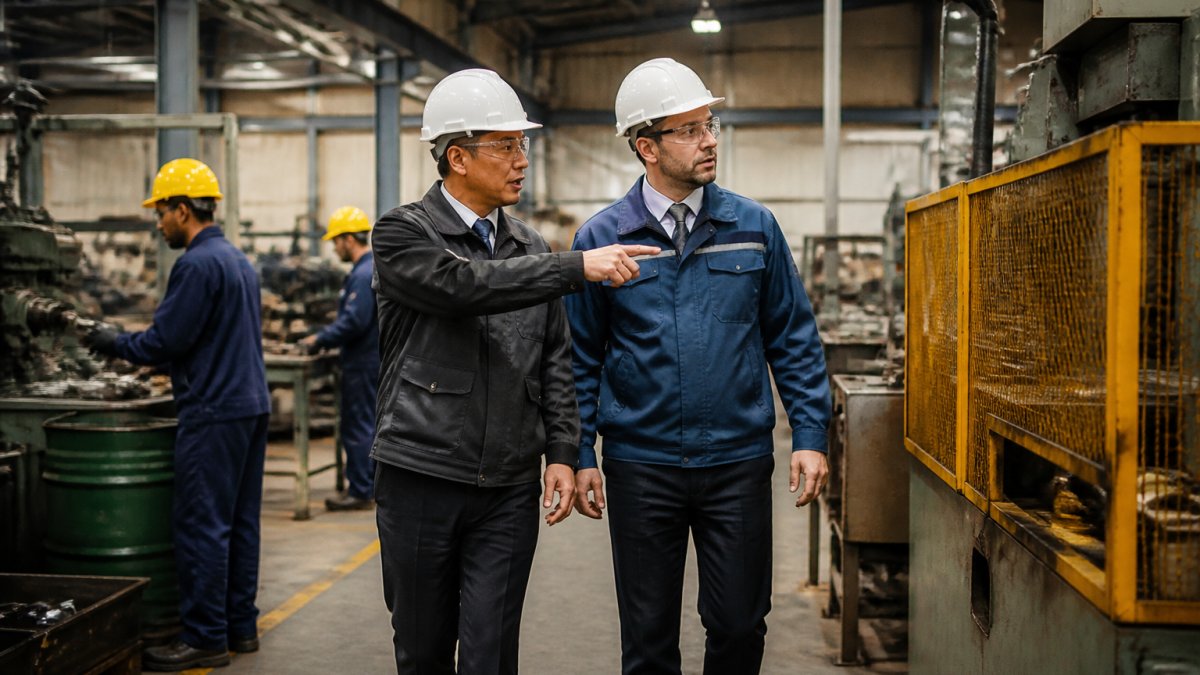
Assessment, Documentation, Training, and Follow-Through
- Assessment: a hazard assessment of each process, from receiving to shipping, including machine guarding, lockout, chemical storage, and housekeeping.
- Documentation: written safety programs, safety policies, and the records that prove training happened.
- Training: OSHA-required training delivered in language your crew understands, with sign-in sheets you can produce.
A common mistake is treating the assessment as the deliverable. The fix is the deliverable. We’ve watched plants file a beautiful audit and change nothing on the floor, which is worse than no audit because it documents that you knew.
OSHA Compliance for Small Manufacturers: What Inspectors Look For
Inspectors look for the same core items at a 20-person plant as at a 200-person plant: hazard identification, written programs where required, training records, injury logs, and evidence that corrective actions closed. Under the OSHA recordkeeping rule, most manufacturers above the small-employer threshold must keep an injury and illness log (OSHA Form 300), a summary (Form 300A) posted each February through April, and incident reports (Form 301).
How an Inspection Actually Unfolds
Most inspections at small plants are unprogrammed, triggered by a complaint, a referral, a fatality or catastrophe, or a programmed inspection of a high-hazard industry. The opening conference is where the compliance officer states the scope and asks for your injury log. From there, the walkaround follows the production flow, and the officer will ask to see written programs, training rosters, and lockout procedures for the machines they observe.
Three practical implications for a small manufacturer:
- Designate a company representative who walks with the officer and takes notes on every machine and record requested. That person is your record of what was observed.
- Produce what is requested, promptly. Delays read as disorganization, and the officer documents them.
- Track every item to closure. Abatement verification is where repeat citations are born, an item marked corrected but not re-verified is a repeat violation waiting to happen.
Federal OSHA Is Not the Only Rulebook
What most guides miss is that state-plan states run their own rules, sometimes stricter than federal, and about half the states operate an OSHA-approved plan covering private employers. A program written for a federal-state plant may not satisfy a state-plan inspector. Before you copy a template or accept a consultant’s program, confirm which rules govern your facility:
- Check whether your state operates a federal OSHA plan or a state plan on the OSHA state plans page.
- If a state plan applies, pull that state’s standards for the hazards you run, machine guarding, lockout/tagout, and hazard communication are the usual divergence points.
- Ask your consultant to cite the specific standard and jurisdiction in every written program they deliver.
Copying another plant’s written program without matching it to your machines, chemicals, and processes is one of the most common citation triggers. Inspectors spot generic language fast, and a program that doesn’t describe your actual floor proves you didn’t assess it.
The Records That Get Asked For First
When an inspector arrives, the first document requests are predictable: the OSHA 300 log, written hazard communication program and safety data sheets, lockout/tagout procedures, machine guarding documentation, forklift operator evaluations, and training records with dates and signatures. Assemble these in one indexed binder or shared folder before you need them. A plant that can produce records in minutes reads as a plant that manages safety; a plant that scrambles reads as one that doesn’t.
The Manufacturing Safety Audit Checklist That Drives Results
A manufacturing safety audit checklist works when it maps to your processes, not to a generic list. The version below is organized by the process areas where small plants most often fall short, so each line ties to a machine, a task, or a record an inspector will actually ask for.
Process-Mapped Audit Items
Machinery and point of operation
- Machine guarding in place and secure on every operating machine
- Guard openings sized so hands and fingers cannot reach the point of operation
- Interlocks functional on guards that open during operation
Lockout/tagout
- Written procedure for each energy source on each machine
- Lockout devices and tags available and used
- Annual periodic inspection of lockout procedures documented
Powered industrial trucks
- Operator evaluations completed and on file (initial and every three years)
- Daily pre-shift inspections documented
- Pedestrian traffic routes marked and separated from forklift lanes
Hazard communication and chemicals
- Labels on every container, including secondary containers
- Safety data sheets current and accessible to workers on every shift
- Written hazard communication program specific to your chemical list
Ergonomics and manual handling
- Repetitive tasks and heavy lifts identified
- Workstation heights and reach distances reviewed
- Mechanical aids available where lifts exceed safe limits
Maintenance and contractor work
- Maintenance tasks covered by lockout/tagout, not just production
- Contractor safety orientation documented before work begins
- Hot work permits used where required
Walking-working surfaces and egress
- Aisles, exits, and walking surfaces clear
- Emergency action plan posted and practiced
- Injury log current and corrective actions closed
Scoring and Prioritizing Findings
A checklist that produces a list of unchecked boxes is not a management tool. Score each item on two axes: severity (could this cause a fatality, a serious injury, or a citation?) and likelihood (how often is the condition present?). Items that are high-severity and high-likelihood get fixed first, regardless of where they appear on the list. Everything else goes into a corrective-action log with an owner and a due date.
Measuring Whether the Audit Changed Anything
Run the checklist quarterly and track the same measures each time so you can see movement:
- Corrective-action closure rate, percentage of findings closed by their due date
- Repeat findings, items found again on the next audit, which signal the fix didn’t stick
- Near-miss reports, a rising count often means reporting is improving, not that safety is worsening
A checklist you run once is a snapshot; a checklist you run on a schedule and score against the last run is a safety management system. The first audit establishes the baseline; every audit after that is a measurement.
Machine Guarding Assessment: The Gap Most Small Plants Miss
Machine guarding is where small plants most often fall short, and it’s rarely because anyone ignores the rule. Guards come off for jam clearing, blade changes, or maintenance, and they don’t always go back.
The fix is procedural as much as physical. If your crew has to defeat a guard to do routine work, the guard design or the procedure is wrong, and an inspector will see it the same way.
Hazard Communication Training for Manufacturing Teams
Hazard communication training teaches employees to read labels, find and use safety data sheets, and understand the hazards of the chemicals they handle. It has to be specific to your chemical list and delivered before exposure, not after.
What most guides miss: training records matter as much as the training. Keep a signed roster with the date, the topics covered, and the trainer’s name.
Photograph your chemical storage area and your posted safety data sheet binder during training. Those photos, dated, become a simple record that the training matched your actual workplace.
Outsourced Consulting vs. a Full-Time Safety Manager
Outsourced safety support fits small manufacturers better than a full-time hire in most cases. A full-time safety manager carries salary, benefits, and training, and a 30-person plant rarely has enough safety work to fill the role.
| Factor | Outsourced Consultant | Full-Time Safety Manager |
|---|---|---|
| Cost structure | Hourly or project-based | Salary plus benefits |
| Best for | Plants under ~100 employees | Larger, high-hazard operations |
| Breadth of expertise | Industrial hygiene, OSHA, environmental | Deep but single-person view |
| Daily floor presence | Scheduled visits | Every day |
| Scalability | Adjust hours as needs change | Fixed commitment |
The honest limitation: an outside consultant isn’t on the floor every morning. If your operation runs continuous shifts with daily high-risk tasks, you may need both, or a consultant plus a trained internal coordinator.
How to Choose a Consultant: A Practical Scorecard
Choose a consultant on verifiable credentials and manufacturing-specific experience, not on the polish of the proposal. Score each candidate 1 to 5 on these, and require evidence rather than claims:
| Criterion | What to Verify | Score (1-5) |
|---|---|---|
| Credentials | Industrial hygiene, environmental, or safety certifications | |
| Manufacturing experience | Plants like yours, same processes and hazards | |
| Inspection familiarity | Has defended citations or prepared for inspections | |
| Written deliverables | Sample programs, not just a scope of work | |
| Follow-through | How corrective actions are tracked and closed | |
| Internal time required | Hours your team must commit per month |
Ask one direct question in the interview: “Walk me through the last time you found a gap a client didn’t know about, and what you did next.” The answer tells you more than any brochure.
The best consultant for a small manufacturer is the one who documents what they find, trains your people to sustain it, and hands you a program that matches your floor. Credentials open the door; follow-through keeps you compliant.
Small manufacturers carry real hazards with lean teams, and the compliance gaps that hurt most are the ones nobody had time to find. Michael Karl McNeil brings twenty-five years of fire service experience, industrial hygiene credentials, and Cal/OSHA citation defense work to plants that need expert safety support without a full-time hire.
Frequently Asked Questions
How much does safety consulting for small manufacturing cost?
Pricing depends on the scope of work, the size of your facility, the number of processes and machines involved, and whether you need one-time assessments or ongoing support. A focused manufacturing safety audit checklist review costs less than a full written safety program plus training. Most small manufacturers start with a fixed-scope assessment, then move to a monthly retainer for ongoing compliance. Request a quote based on your floor layout and headcount rather than comparing hourly rates alone.
Does OSHA apply to small businesses?
Yes. OSHA coverage applies to most private-sector employers regardless of size, and small manufacturers are not exempt. The agency’s On-Site Consultation program offers free confidential help for smaller employers, but it does not replace a full compliance program. Penalties are adjusted annually for inflation and can reach tens of thousands of dollars per serious violation, with higher amounts for willful or repeat citations. Even a two-person shop must meet hazard communication, machine guarding, and recordkeeping requirements that apply to its operations.
When should a small manufacturer hire a safety consultant?
Hire one when you have had a near-miss or recordable incident, when you are preparing for an OSHA inspection, when you are adding machines or processes, or when you have no written safety program at all. A consultant also helps when your insurance carrier asks for a safety audit or when a customer requires proof of OSHA compliance for small manufacturers in your supply chain. If you already have a part-time safety coordinator but no industrial hygiene or machine guarding expertise, an outside consultant fills that gap without adding headcount.
How do you evaluate a safety consultant before signing?
Ask for their credentials, their specific experience with machine guarding assessment and hazard communication training for manufacturing, and examples of written programs they have produced. A practical scorecard should cover: relevant industry experience, knowledge of the standards that apply to your processes, a clear scope with deliverables, a timeline for the first 30 to 90 days, and how they will measure outcomes such as reduced recordable incidents and closed corrective actions. Check whether they will train your team to sustain the program or leave you dependent on them.


Leave a Reply