
Table of Contents
- What an EHS Expert Witness Does in Litigation
- When to Hire an Expert Witness for EHS Litigation
- Qualifications for Safety Expert Witnesses
- Vetting and Interviewing Your Expert: A Checklist
- OSHA Citation Defense Strategy and Expert Support
- Expert Witness Deposition Preparation
- Cost Structure, Fee Transparency, and Conflict Checks
- Frequently Asked Questions
Last Updated: September 16, 2026
What an EHS Expert Witness Does in Litigation
Hiring an expert witness for EHS litigation means retaining a qualified environmental health and safety professional to evaluate a case’s facts, form a technical opinion, and explain it to a judge or jury in plain language. The role demands someone who can defend their findings under cross-examination.
The scope typically covers four areas:
- Technical and forensic evaluation of incident scenes, equipment, and documentation
- Regulatory analysis against OSHA regulations, Cal/OSHA standards, and environmental rules
- Written reports stating opinions to a reasonable degree of professional certainty
- Testimony at deposition, arbitration, or trial
Consulting Expert vs. Testifying Expert
A consulting expert works behind the scenes, helping a legal team understand the technical record, test theories, and prepare for the other side’s witnesses. Their work is generally shielded from discovery.
When to Hire an Expert Witness for EHS Litigation
Bring in an expert before the case strategy hardens. Waiting until discovery closes limits what a technical evaluation can contribute and gives opposing counsel a cleaner path to challenge your evidence.
Circumstances that call for early retention:
- A workplace fatality or serious injury with disputed causation
- An OSHA citation you intend to contest before the Appeals Board
- A premises liability or product liability claim involving chemical exposure, fire, or equipment failure
- A class action alleging systemic safety failures
- Allegations of negligent hiring or inadequate safety training
Qualifications for Safety Expert Witnesses
Courts apply admissibility tests to expert testimony, and the credential record is challenged first. A witness with strong field experience but no verifiable credentials is vulnerable; so is one with impressive letters and no hands-on exposure to the conditions at issue.
Credentials That Carry Weight in Court
Credentials that tend to survive challenge include:
- A graduate degree in environmental health, industrial hygiene, or a related science
- Professional registration such as Registered Environmental Professional (REP) or Registered Industrial Hygiene Professional (RIH)
- Specialized designations like Emergency Planning Professional (EPP) or Qualified SWPPP Developer (QSD)
- Documented field experience in fire prevention, industrial hygiene monitoring, or compliance auditing
- A clean record of prior expert testimony
The U.S. Courts’ overview of expert testimony standards explains how judges weigh qualifications against the reliability of the underlying methodology. Credentials open the door; methodology keeps the testimony in the record.
Ask a prospective expert for a list of cases where their testimony was excluded or limited. A witness who has never been challenged is either new to testifying or not being candid. The answer tells you more than the resume does.
Vetting and Interviewing Your Expert: A Checklist
Most retaining counsel interview two or three candidates and pick on instinct. A structured process produces a better decision, creates a record if the retention is questioned, and surfaces disqualifying issues before you invest in an engagement.
Gate 1: Threshold Verification
These items are binary. Confirm each one before you spend time on a substantive interview.
- Confirm the expert’s specific experience with the industry, process, and hazard at issue, not just the general field
- Verify every credential directly with the issuing body (a certificate number and a phone call, not a scanned PDF)
- Confirm the expert can meet your reporting and disclosure deadlines under the scheduling order
- Run a conflict check against all parties, their insurers, their counsel, and related entities
- Confirm the expert carries professional liability coverage appropriate to the engagement
Gate 2: Depth and Methodology
This separates a witness who can survive cross-examination from one who merely has a strong CV.
- Ask how many times they have been deposed and how many times they have testified at trial, get the actual numbers, not a range
- Request two redacted writing samples: one report and one deposition transcript excerpt, if available
- Ask them to walk you through how they formed an opinion in a prior matter, step by step, including what they would have done differently
- Ask how they handle a question outside their expertise, the correct answer is a clear boundary, not an improvised opinion
- Ask how they respond when the evidence does not support the theory your client prefers
- Ask what documents or testing they would want to see first if retained tomorrow
Gate 3: Fit and Communication
- Clarify who communicates with the expert, how often, and through what channel
- Confirm the expert understands the difference between a consulting and a testifying designation and will not blur the two
- Discuss how they will handle pressure to soften an unfavorable finding
- Ask for a rate schedule and retainer terms in writing before you extend an offer
Scoring the Candidates
A weighted score forces discipline into the decision. Rate each candidate 1-5 on four dimensions, weighted to match your case:
- Subject-matter fit, direct experience with the exact hazard, industry, and regulatory framework at issue
- Testimonial track record, number of depositions and trials, and whether any testimony was excluded or limited
- Methodology rigor, whether their approach would survive a reliability challenge
- Communication, clarity in writing and composure under adversarial questioning
The Conflict Check Deserves Its Own Pass
An expert who previously consulted for the opposing party or their insurer may be disqualified or impeached on the stand. Ask for a written disclosure covering prior work for the parties, their insurers, their counsel, and any parent or affiliate entities, and document the date you received it.
Skipping the conflict check is the most common and most expensive mistake in expert retention. A disqualification motion filed after your expert has spent months on the case wastes the entire budget and can push your deadline past the point of recovery.
OSHA Citation Defense Strategy and Expert Support
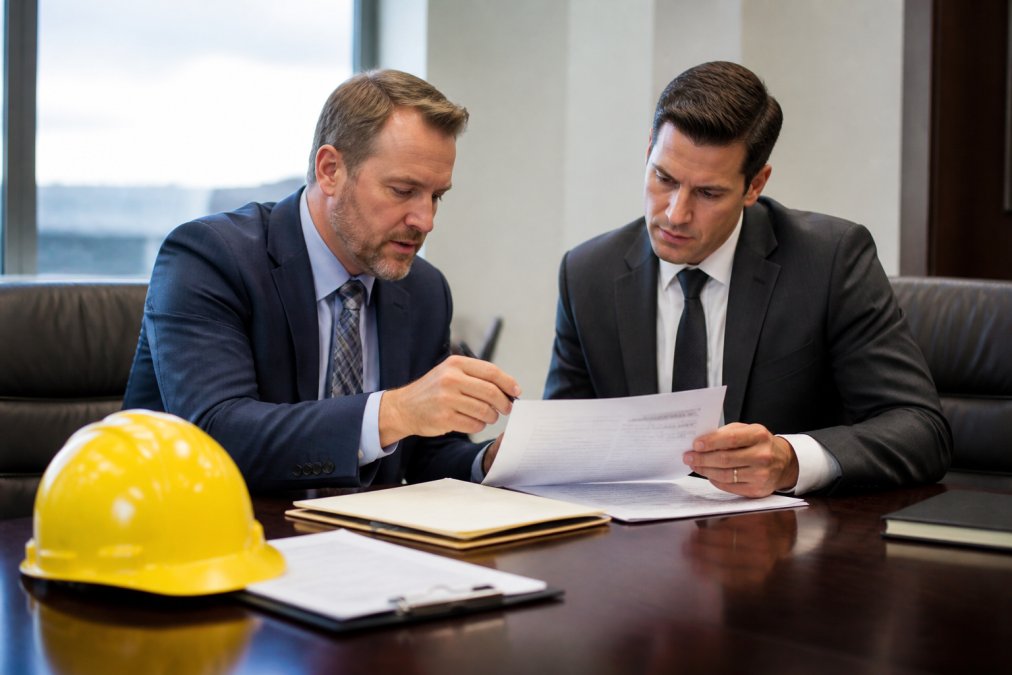
An expert’s most concrete contribution in citation defense is translating the inspection record into a defensible technical narrative. Inspectors document conditions; an expert explains what those conditions actually mean in context.
Expert Witness Deposition Preparation
Deposition preparation is where cases are often won or lost. A technically brilliant expert who performs poorly under questioning damages the case, and the transcript follows them into trial.
What to Cover Before the Deposition
Preparation should cover substance and demeanor in equal measure:
- Review the expert report line by line and identify every opinion that could be challenged
- Rehearse the basis for each opinion, including the documents and testing behind it
- Practice answering only the question asked
- Prepare for questions about fees, prior testimony, and methodology
- Identify the boundaries of the expert’s knowledge and practice saying “I don’t know”
- Walk through likely hypotheticals from opposing counsel
The Federal Rules of Evidence on expert testimony govern what opposing counsel can probe, and understanding those limits helps an expert stay composed. A witness who knows where the line sits is far harder to rattle.
The strongest deposition answer is often the shortest one. Experts who over-explain give opposing counsel new lines of questioning. Answer, stop, and let your attorney handle the rest.
Cost Structure, Fee Transparency, and Conflict Checks
Expert fees are among the least transparent parts of litigation budgeting, and the structure matters as much as the rate. Most experts bill hourly, but the rate is rarely uniform across a case. Understanding how phases differ lets you forecast spend and avoid surprises.
How the Phases Are Typically Billed
A common pattern is a tiered rate schedule:
- Initial review and case assessment, often the lowest rate, billed for reading the file, inspecting the site, and forming a preliminary view
- Research, testing, and report drafting, mid-tier rate, and usually the largest single block of hours
- Deposition and trial testimony, the highest rate, because the expert is committing a full day and cannot bill other matters
- Travel and standby time, often billed at a reduced rate or a flat per-day charge, plus reimbursement for airfare, lodging, and meals
Ask for the full schedule in writing before engagement, and ask specifically how the expert bills for:
- Preparation time in the days immediately before a deposition or trial
- Waiting time at a courthouse or deposition location
- Time spent responding to supplemental document productions
- Revisions to a report after new evidence surfaces
Questions to Settle Before You Sign
- What is the hourly rate for each phase of work, and does it change after a certain number of hours?
- Is there a retainer, how is it applied, and is it replenished when depleted?
- Who bears the cost of document review, testing, travel, and any third-party analysis?
- What is the expert’s policy on cancellation or rescheduling of a deposition or trial date?
- Will the expert provide periodic invoices with task-level detail, and how often?
A retainer is standard practice and is typically applied against the final invoice rather than charged in addition to it. Confirm the mechanics in writing so there is no dispute later.
Budgeting the Expert Line Item
The biggest driver of cost is not the hourly rate but the scope of the engagement. An expert retained early to shape the technical record usually costs less overall than one brought in late to reconstruct a hardened record, which requires more document review, testing, and reactive work.
Two practical controls:
- Define the scope in the engagement letter. Specify what the expert is being asked to opine on and what is out of scope. Open-ended engagements invite scope creep.
- Ask for a budget estimate by phase. A written estimate for the assessment, report, and testimony phases gives you a benchmark to measure invoices against.
Conflict Checks Belong in the Same Conversation
Conflict checks belong in the same conversation as fees, because a conflict discovered late can void months of preparation and leave you without a witness on the eve of trial.
Retaining counsel who need a defensible technical opinion, a clear fee schedule, and a witness who can hold up under cross-examination, not just a report to file.
Frequently Asked Questions
What is the role of an EHS expert witness in litigation?
An EHS expert witness evaluates workplace safety conditions, environmental compliance, and regulatory standards to form a technical opinion for legal proceedings. They conduct forensic analysis, review OSHA regulations and facts, and produce expert testimony on issues like premises liability, product liability, or negligent hiring. Their technical evaluation helps judges and juries understand complex scientific evidence in EHS litigation.
When should you hire an environmental health and safety expert witness?
Hire one early when a case involves workplace injury, regulatory violations, or disputed safety practices. Early involvement supports case strategy, fact-finding, and due diligence before deadlines tighten. For OSHA citation defense strategy, bringing in an expert before the contest deadline preserves options. Waiting until trial limits their ability to shape technical evaluation and testimony.
What qualifications should an EHS expert witness possess?
Look for relevant certifications, hands-on industry experience, and a clear understanding of regulatory standards like OSHA regulations and Prop 65. Qualifications for safety expert witnesses should include a technical opinion grounded in forensic analysis, prior deposition or expert testimony experience, and familiarity with the specific hazards in your case. Credentials alone are not enough; practical field experience matters.
What is the difference between a consulting expert and a testifying expert?
A consulting expert advises on case strategy and technical evaluation without testifying, and their work is often protected from discovery. A testifying expert produces a formal technical opinion, submits a report, and gives expert testimony in deposition or trial. Many cases use both roles. Understanding this distinction shapes how you structure expert witness deposition preparation and litigation support.


Leave a Reply