Last Updated: November 25, 2026
Quick Summary
To investigate workplace accidents, first respond to the injured worker and control immediate hazards, then secure and document the scene before anything is moved. Gather records and interview witnesses separately, build a timeline, and identify both immediate and underlying causes. Assign corrective actions with an owner, a deadline and a follow-up check.
- Get medical help to the injured worker first, and call emergency services when the injury is serious.
- Photograph the scene from several angles before anything is moved or cleaned up.
- Interview witnesses privately, one at a time, using open questions that let them describe events.
- Separate immediate causes, like a worker reaching into a running machine, from underlying causes such as missing guards.
- Verify each corrective action with evidence, such as a photograph of an installed guard or a training roster.
Table of Contents
- How to Investigate Workplace Accidents: Why It Matters and When to Start
- Step 1: Respond Promptly and Address Immediate Hazards
- Step 2: Secure and Document the Incident Scene
- Step 3: Form the Investigation Team and Gather Evidence
- Step 4: Interview Injured Workers and Witnesses
- Step 5: Apply the Five Main Accident Investigation Techniques to Find Root Causes
- Step 6: Use an Accident Investigation Checklist and Workplace Incident Report Sample
- Booking a Scoped Investigation Review for Your Next Incident
- Frequently Asked Questions
How to Investigate Workplace Accidents: Why It Matters and When to Start
Workplace accidents are rarely random. Most have causes that can be found, fixed and kept from happening again, but only if someone looks closely at what went wrong.
A workplace accident investigation is a structured review of an incident to learn what happened, why it happened and what must change. It is different from assigning blame.
The best time to start is immediately. Evidence fades, witnesses forget details and equipment gets moved or repaired.
Here is what a strong investigation usually covers:
- What happened, in order, from the start of the task to the injury
- The immediate cause, such as the action or condition that triggered the event
- The underlying causes, such as training gaps, maintenance problems or weak procedures
- The corrective actions needed, with an owner and a deadline for each
Investigations are sometimes treated as paperwork required after a serious injury. The same process can also reveal near-misses, equipment problems and training gaps before someone gets hurt.
Keep one thing in mind throughout: an investigation is only as good as the facts it captures. Each step below is designed to protect those facts.
Step 1: Respond Promptly and Address Immediate Hazards
The first priority after any accident is the safety of everyone still on site. Once everyone is safe, clear responsibility for maintaining safe conditions can help prevent another emergency, making construction site safety accountability part of the response as well as the investigation.
Once the worker is cared for, check for hazards that could still cause harm. A leaking chemical line, an unstable load or exposed wiring can turn one injury into several. Shut down the equipment involved, and stop work in the area until it is safe.
A common mistake is restarting operations too quickly to get production back on track. Resist that pressure. Stopping the line for an hour costs far less than a second accident.
Watch out: moving equipment before you have photographed it can erase the evidence needed to explain how the accident happened.
Step 2: Secure and Document the Incident Scene
Once immediate hazards are controlled, protect the scene. Rope off or barricade the area, and keep unnecessary people out. Mark the position of equipment, tools, materials and any debris before anything is moved.
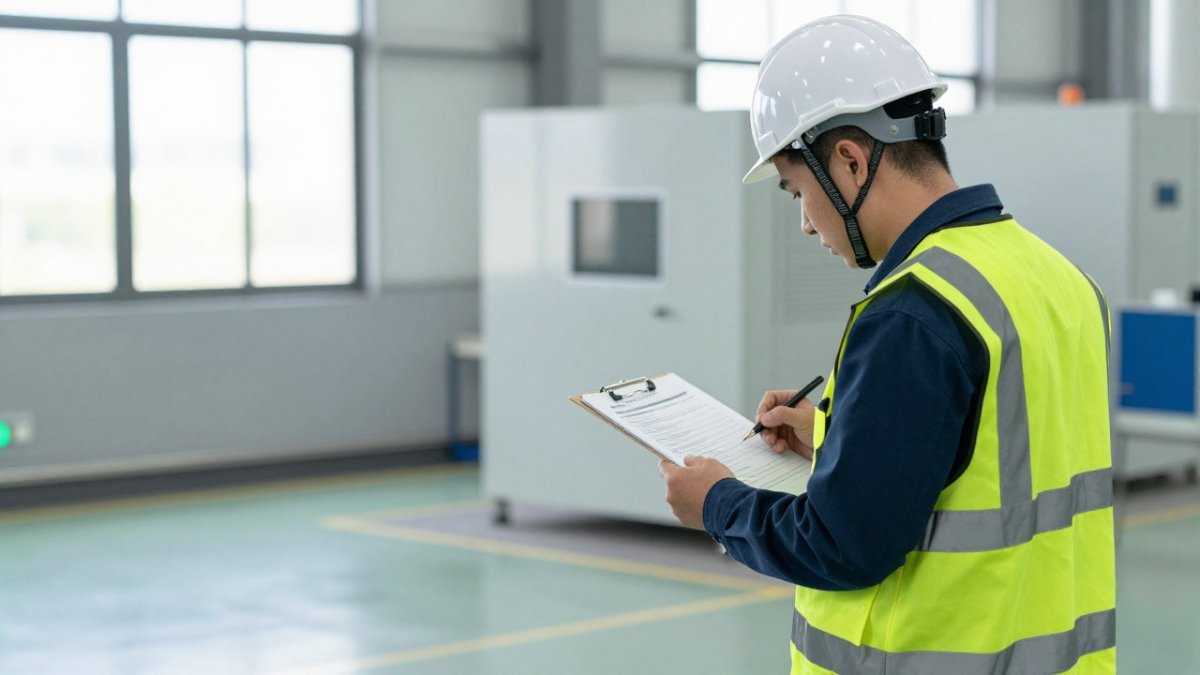
Documentation should happen early and thoroughly. Take photographs from several angles, including wide shots that show the whole area and close-ups of equipment, guards, controls and anything that looks damaged or out of place. Sketch a simple diagram with measurements and locations, and write down the time and conditions, such as lighting, weather or noise level.
If something must be moved for safety or to restore service, photograph and record its original position first. Keep a clear record of who entered the scene and when.
Keep the scene protected until the investigation team has finished its initial review. Premature cleanup is one of the most common ways evidence gets lost.
Step 3: Form the Investigation Team and Gather Evidence
A good investigation team pairs people who know the work with people who know how to investigate. Include a supervisor or manager with authority to make changes, a worker familiar with the task, and a safety professional who can apply investigation methods. Small employers may need to bring in outside help, and that is a reasonable choice.
Assign clear responsibilities. One person should lead, another should handle photographs and diagrams, and another should track records. Clear roles prevent duplicated work and missed steps.
Evidence usually includes more than what the team sees on site. Collect the relevant records as well:
- Maintenance and inspection logs for the equipment involved
- Training records for the worker and their supervisor
- Job procedures, work permits and safety data sheets
- Previous incident reports for the same area or task
- Shift schedules and staffing levels that day
Note what each record shows and whether it matches what witnesses say. Gaps between records and recollection often point to the real issue.
Step 4: Interview Injured Workers and Witnesses
Interviews give the investigation its human detail, but they need careful handling. Talk to the injured worker once they are medically stable, and talk to witnesses as soon as practical while memories are fresh. Speak privately, one person at a time.
Start with open questions: “Walk me through what you were doing before the incident.” Avoid leading questions that suggest an answer. Let the person describe events in their own words, then ask follow-up questions about what they saw, heard and felt.
Trauma-informed, non-blaming interviews are important. An injured worker who fears punishment may hide details, and that makes the investigation weaker and the workplace less safe.
Record each interview accurately, and ask the interviewee to review the notes for correctness when possible. Keep the notes confidential and share them only with people who need them for the investigation.
Step 5: Apply the Five Main Accident Investigation Techniques to Find Root Causes
Once the facts are gathered, the team must explain why the accident happened. A list of techniques is not enough; the team needs to know which one to reach for and how to tell a real root cause from a restatement of the injury. Five commonly used techniques cover most incidents:
- Sequence of events: Build a timeline from the first sign of trouble to the injury, noting each action and condition. Put times on every entry, even approximate ones, because gaps in the timeline usually mark where evidence is missing.
- Change analysis: Compare what was different on the day of the accident, such as a new worker, a changed material, an altered schedule or a recently modified procedure. Most incidents trace back to a change that was never assessed for its effect on safety.
- Barrier analysis: Identify which safeguards were supposed to prevent the accident and why each one failed or was missing. List every barrier in the intended sequence, then mark each as present, absent, bypassed or failed.
- Causal factor charting: Map each contributing factor and show how they connected to produce the outcome. This is the technique that best exposes how several small weaknesses combined into one injury.
- The “five whys”: Ask “why” repeatedly until the team reaches a cause that management can actually fix. It is fast, but it follows a single chain and can stop too early, so check its answers against the timeline and the barrier analysis.
Use more than one technique when the accident is complex. A practical pairing is sequence of events plus barrier analysis for equipment-related injuries, and change analysis plus causal factor charting for incidents that follow a staffing, schedule or procedure change.
Distinguish immediate causes from underlying causes. An immediate cause might be a worker reaching into a running machine. The underlying causes could include a missing guard, inadequate lockout training or production pressure to keep the line moving.
Watch out: a root cause that cannot be fixed by a specific, assignable change is usually a symptom in disguise, so push the team to keep asking until the answer points to a condition management controls.
The article describes five techniques that cover most incidents, each suited to a different kind of question.
| Technique | What it does | Key difference |
|---|---|---|
| Sequence of events | Builds a timeline from first sign of trouble to injury | Timed entries; gaps mark missing evidence |
| Change analysis | Compares what differed on the day of the accident | Finds changes never assessed for safety effect |
| Barrier analysis | Lists safeguards and how each failed or was missing | Marks each barrier as present, absent, bypassed or failed |
| Causal factor charting | Maps factors and how they connected | Shows how small weaknesses combined |
| Five whys | Repeats “why” until a fixable cause appears | Fast but follows one chain; check against timeline |
Step 6: Use an Accident Investigation Checklist and Workplace Incident Report Sample
A checklist keeps the investigation consistent and complete. Use one each time, and review it at the end to confirm nothing important was skipped. A workable checklist covers these items in order:
- Scene secured and hazards controlled
- Photographs taken, including wide shots and close-ups
- Diagram sketched with measurements
- Scene entry log started
- Witnesses identified and interviewed separately
- Records collected: maintenance logs, training records, procedures, permits, prior incident reports
- Timeline built with times on each entry
- Immediate and underlying causes identified
- Corrective actions assigned with an owner and a deadline
- Follow-up date set to verify each action
- Report reviewed and filed securely
The final report should be clear enough for someone who was not involved to understand what happened. A typical incident report includes:
- Date, time and location of the incident
- Names and roles of those involved and witnesses
- A description of the sequence of events
- Immediate and underlying causes
- Corrective actions, each with an owner and a completion deadline
- How and when the team will check that the fixes worked
Corrective actions only count if they are carried out and checked. Set a follow-up date to confirm that the fix is in place. A simple tracking table works: one row per action, with columns for the action, the owner, the due date, the verification method, the date verified and the result.
Measuring whether corrective actions reduce repeat incidents is an important part of an investigation. Two indicators are useful: recurrence of the same incident type in the same area or task, and completion rate of corrective actions on time.
Keep the completed report and supporting records in a secure file. Confirm your reporting obligations, which can vary by location and by the type of injury, and meet any deadlines that apply to your operation.
Booking a Scoped Investigation Review for Your Next Incident
Investigating an accident well takes time, training and an objective view. An outside review can help when an incident is serious, the cause is unclear or the workplace has had repeat problems. For current scope and pricing, contact McNeil Safety Consulting directly through the website for a quote.
Frequently Asked Questions
What are the 5 steps of accident investigation?
A practical sequence has five stages: respond and protect people, secure and document the scene, gather evidence and records, interview workers and witnesses, then identify root and contributing causes and assign corrective actions with owners and deadlines. Each stage feeds the next. Skipping the documentation stage is the most common reason findings later cannot be defended to inspectors or counsel, so record what you see before anything is moved or cleaned up.
How soon should a workplace accident be investigated?
Begin immediately, while the scene and witness recollections are still intact. Initial steps such as securing the area, documenting conditions and recording witness names should happen the same shift. A fuller investigation with interviews and records review should follow promptly. Check federal and state reporting requirements at the same time, since those deadlines run independently of your internal timeline.
Who should conduct a workplace accident investigation?
The investigation team should include someone trained in incident investigation, a supervisor familiar with the work area, a representative of the workers or safety committee where one exists, and subject-matter experts for equipment or process questions. Keep the team focused on system causes rather than individual blame. An outside investigator can add objectivity when the incident is serious, involves litigation risk, or when internal staff are too close to the work involved.
What should a workplace incident report sample include?
A usable report includes the date, time and location; a description of the sequence of events; names and roles of the injured worker and witnesses; photographs and diagrams of the scene; equipment and maintenance records; the immediate and underlying causes; and a corrective action table listing each action, its owner and its completion date. Keep the language factual and free of conclusions about fault. A template with these headings lets you compare incidents over time and spot repeat patterns.


Leave a Reply