Last Updated: October 26, 2026
Quick Summary
Fire code record retention requirements in California depend on the record type and applicable regulations. Incident reports should be retained permanently, fire drill records require one year minimum with three years recommended, and portable fire extinguisher inspection records follow Cal/OSHA Section 6151 rules.
- Incident reports and fire investigation records must be retained permanently for litigation protection and historical context.
- Fire drill records require minimum one-year retention, with three years recommended as best practice.
- Portable fire extinguisher inspections must document location, date, inspector name, condition, and corrective actions.
- Organize records by retention schedule in a centralized location such as your safety or facility management office.
- Maintain backup systems and demonstrate record accessibility, integrity, and proper destruction documentation during inspections.
Table of Contents
- Overview of California Fire Code Record Retention Requirements
- Fire Inspection Records Retention: What You Must Document
- Fire Protection System Maintenance Records and Retention Periods
- Fire Extinguisher Inspection Log Template and Retention Standards
- California Fire Prevention Training Documentation Requirements
- Retention Schedules by Record Type and Statutory Authority
- Digital Records, Backups, and Proof of Compliance
- Setting Up Your Records Management System
- Frequently Asked Questions
Overview of California Fire Code Record Retention Requirements
Fire code record retention concerns documentation that may be relevant if an incident occurs. Requirements depend on the applicable rules and circumstances.
Fire protection requirements can involve multiple regulatory layers. Recordkeeping requirements depend on the applicable rules and circumstances.
Fire Inspection Records Retention: What You Must Document
Fire inspections generate records. Applicable retention requirements depend on the inspection type and system inspected.
Organize inspection records by system type and facility location.
Fire Protection System Maintenance Records and Retention Periods
Fire protection systems may require ongoing maintenance, and services can create records.
Portable fire extinguisher inspection records, covered more thoroughly in the next section, follow Cal/OSHA Section 6151 rules. Michael Karl McNeil’s analysis of Cal/OSHA section 6151 requirements for portable fire extinguishers explains exemptions, travel distance rules, and inspection timelines in detail.
Fire Extinguisher Inspection Log Template and Retention Standards
Portable fire extinguishers are fire protection devices. Applicable documentation requirements depend on the circumstances.
-
Location of the extinguisher (building, floor, area)
-
Inspection date
-
Inspector name or initials
-
Condition observed (pressure gauge reading, visible damage, accessibility)
-
Any corrective action taken
-
Extinguisher type and serial number
-
Date of service
-
Work performed (hydrostatic test, seal replacement, refill, etc.)
-
Technician name and certification number
-
Next service date
A practical template for your inspection log:
| Date | Location | Pressure Reading | Visible Damage | Accessible | Inspector | Action Taken |
|---|---|---|---|---|---|---|
| 10/15/2026 | Building A, 1st Floor | 150 psi | No | Yes | JM | None |
| 11/12/2026 | Building A, 1st Floor | 145 psi | No | Yes | JM | None |
| 12/10/2026 | Building A, 1st Floor | 140 psi | No | Yes | JM | Tag replaced |
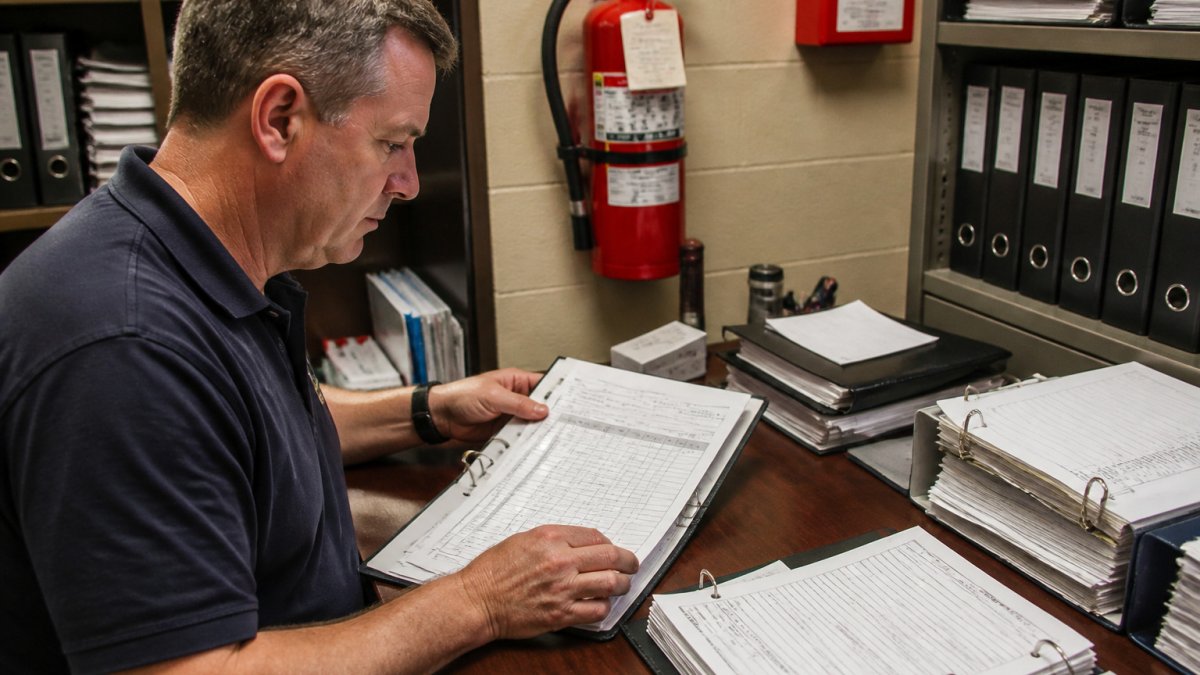
Keep the master log in a centralized location such as your safety or facility management office.
California Fire Prevention Training Documentation Requirements
Fire prevention training can create records documenting who was trained, when, and on what topics. How to Document Fire Prevention Training for Inspectors provides detailed guidance on structuring training records that satisfy both Cal/OSHA and local fire code requirements.
-
Training date
-
Employee name and ID
-
Topics covered (evacuation procedures, extinguisher use, alarm response, etc.)
-
Trainer name
-
Attendance confirmation (signature or digital record)
-
Drill date and time
-
Number of participants
-
Evacuation time
-
Any issues or delays observed
-
Corrective actions taken
How to Document Fire Prevention Training for Inspectors provides detailed guidance on structuring training records that satisfy both Cal/OSHA and local fire code requirements.
Retention Schedules by Record Type and Statutory Authority
Different record types may be subject to different retention requirements. Organizing records by retention schedule can help track them.
Permanent Records
Incident reports and investigation records related to fires, near-misses, or fire safety issues should be retained permanently. These protect you in litigation and provide historical context for system improvements.
Multi-Year Retention (Three to Six Years)
Fire drill records: one year minimum, three years recommended.
One-Year Retention and Operational Records
Operational records can support day-to-day fire safety management.
Digital Records, Backups, and Proof of Compliance
Records management can include attention to accessibility, integrity, and protection from loss.
- Pull a random sample of records and show they are complete and legible
- Demonstrate your backup system works
- Show your retention schedule and explain how you use it
- Provide documentation of any records you intentionally destroyed after their retention period expired
How to Prepare for a Cal/OSHA Inspection: 2026 Guide covers the inspection process in detail, including what inspectors look for in your records management system.
Setting Up Your Records Management System
A functional records management system requires three components: a clear retention schedule, organized storage, and a process for destroying records when their retention period expires.
-
“Fire Records, Retain Until 10/31/2027” (three-year retention)
-
“Fire Records, Retain Until 10/31/2029” (five-year retention)
-
“Fire Records, Permanent”
-
Collecting records from inspectors, contractors, and internal safety staff
-
Filing records in the correct retention category
-
Monitoring retention deadlines
-
Destroying records when their period expires
-
Producing records during inspections
-
Record type and date range destroyed
-
Date of destruction
-
Method of destruction (shredding, incineration, etc.)
-
Witness or authorization
-
New records are filed correctly
-
Retention deadlines are tracked
-
No records have been lost or damaged
-
Your backup system is functioning
Benefits of Hiring a Fire Safety Consultant in 2026 outlines how professional guidance can strengthen your records management system and ensure compliance with evolving code requirements.
Fire code record retention concerns documentation of system performance, training, and corrective action. Michael Karl McNeil provides written safety programs and emergency planning.
Frequently Asked Questions
How long must fire inspection records be kept in California?
Retention requirements depend on the record type and the rules that apply to the facility. Consult the relevant official sources for current requirements.
What fire prevention training documentation should a facility retain?
Training documentation can include employee names, training dates, topics covered, trainer information, and attendance records. Check the applicable official sources for current requirements.
How long should fire extinguisher inspection records be kept?
Check the applicable official sources for current fire extinguisher recordkeeping requirements.
What happens if fire records are lost or destroyed?
The consequences of losing or destroying fire records depend on the applicable requirements and circumstances. Consult the relevant official sources for guidance.


Leave a Reply