Table of Contents
- What the Top 3 OSHA Citations Actually Mean
- 1. Fall Protection: The Most Frequently Cited Standard
- 2. OSHA Hazard Communication Violations in General Industry
- 3. Respiratory Protection: A Recurring Top-Three Standard
- OSHA Citation Classifications and Penalty Ranges
- What to Do After an OSHA Inspection or Citation
- Preventing the Top 3 OSHA Citations Before an Inspector Arrives
- Conclusion
- Frequently Asked Questions
Last Updated: October 15, 2026
What the Top 3 OSHA Citations Actually Mean
The top 3 citations given out by OSHA are Fall Protection, Hazard Communication, and Respiratory Protection.
The federal Occupational Safety and Health Administration, known as OSHA, publishes its most frequently cited standards each fiscal year. The full ranked lists are published on OSHA’s most frequently cited standards page.
A citation is a formal notice that an employer broke a workplace safety rule. A violation is the specific broken rule listed inside that citation.
Citations vs. Violations: Why the Numbers Differ
One inspection can produce one citation with three violations, or three citations with one violation each. That gap explains a lot.
- Citation count = number of formal notices issued
- Violation count = number of individual rule breaks inside those notices
- Penalty amount = money owed, based on violation type and size
Rankings also shift by year and by source. Construction and general industry follow different standards, so a list built from construction data will look different from one built on general industry data.
When you compare OSHA lists, check the fiscal year and the metric first. A “top 3” list based on violations is not the same as one based on citations.
1. Fall Protection: The Most Frequently Cited Standard
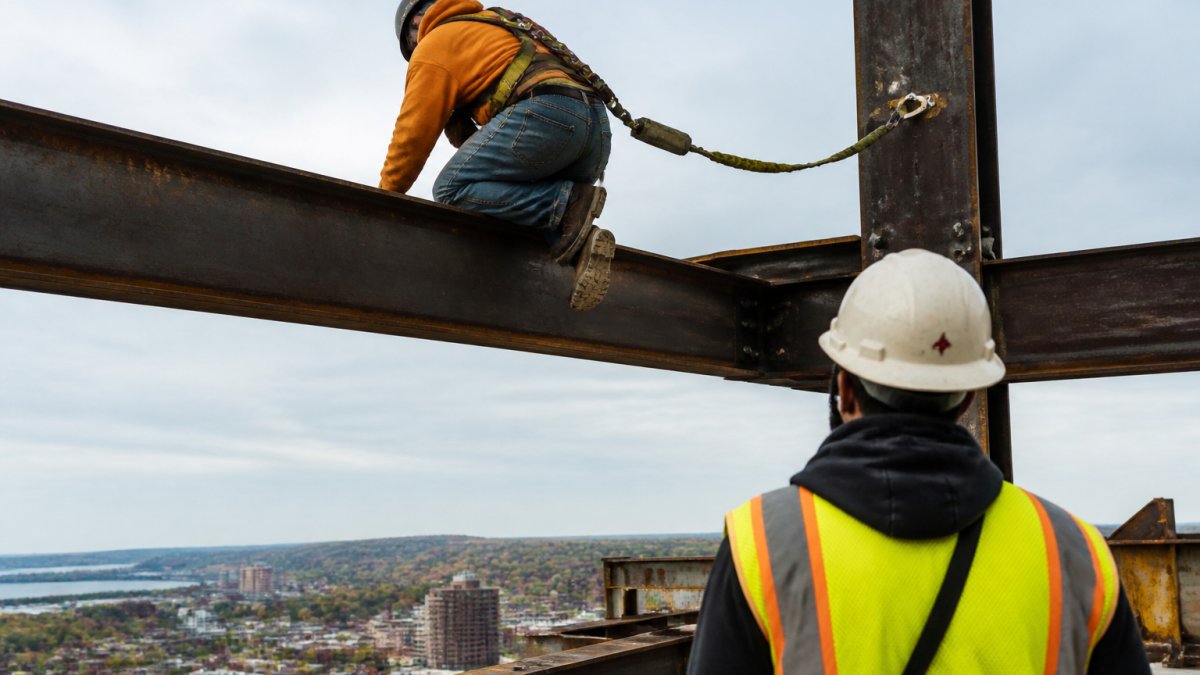
Fall Protection, standard 1926.501, has held the top spot on OSHA’s most frequently cited standards list for more than a decade. It applies to construction work at six feet or higher and requires one of three systems: guardrails, safety nets, or personal fall arrest.
Why It Stays at Number One
Three structural reasons keep fall protection on top, and none of them is laziness:
- Exposure is universal. Every residential roofer, steel erector, solar installer, and bridge crew works above six feet for most of the shift.
- The hazard is dynamic. Anchors move, leading edges change, and a compliant setup at 9 a.m. can be non-compliant by 2 p.m. as the deck gets framed.
- The rule is specific. 1926.501 lists roughly a dozen duty scenarios, unprotected sides and edges, hoist areas, holes, formwork, ramps, excavations, dangerous equipment, and each has its own trigger height and control method.
Where the Violations Actually Cluster
OSHA’s own compliance guidance and the pattern across published citation data point to a short list of repeat failures:
- No fall protection at all at six feet or higher (1926.501(b)(1) and related paragraphs)
- Unprotected roof edges and floor openings
- Residential construction without conventional fall protection and no written fall protection plan (1926.501(b)(13))
- Damaged, worn, or improperly fitted harnesses
- Anchor points not rated for the load, or anchored to the wrong structure
- Workers using fall arrest gear without the 1926.503 training certificate
Construction vs. General Industry: Two Different Standards
This is the split most summaries blur. Construction fall protection lives in 1926.501. General industry walking-working surfaces live in 1910.28, with training in 1910.30. A warehouse worker on a mezzanine and a roofer on a truss are covered by different rules with different trigger heights and different equipment requirements. If you pull a national “top citations” list and try to apply it to a general-industry site, you will misread your own exposure.
The Prevention Checklist That Actually Holds Up
- Written fall protection plan for every task at six feet or higher, updated when the sequence changes
- A designated competent person who can identify and correct hazards before each shift
- Harness, lanyard, and anchor inspection logged before each use
- Rescue plan in place, a suspended worker has minutes, not hours
- 1926.503 training documented with the worker’s name, date, and trainer signature
Fall protection is not one citation. It is a family of standards, and the paragraph an inspector cites tells you exactly which control was missing. Read the paragraph number, not just the standard number.
2. OSHA Hazard Communication Violations in General Industry
Hazard Communication, standard 1910.1200, requires employers to tell workers what chemicals they handle and how to handle them safely. It is the most cited standard in general industry.
OSHA hazard communication violations usually come down to paperwork and labels. Three things drive most of them:
- No written hazard communication program
- Missing or outdated safety data sheets
- Containers without proper labels
- No worker training on the chemicals in use
- Secondary containers left unlabeled
If a worker pours a solvent into an unmarked spray bottle, that is a violation. Small habits create big exposure.
An unlabeled secondary container is one of the easiest violations for an inspector to spot. It also creates real injury risk when workers mistake one chemical for another.
3. Respiratory Protection: A Recurring Top-Three Standard
Respiratory Protection, standard 1910.134, covers workplaces where employees breathe hazardous dust, fumes, or vapors. It stays near the top of the list because the program requirements are detailed.
A compliant program needs more than handing out masks. It needs a written plan, medical evaluation, fit testing, and training. Respirator use also requires regular cleaning and storage rules.
Common gaps include:
- No written respiratory protection program
- No medical evaluation before fit testing
- Fit testing skipped or expired
- Wrong cartridge for the hazard
- No training on seal checks
Industrial hygiene monitoring answers the question that comes first: does this task actually require a respirator, and if so, which one?
OSHA Citation Classifications and Penalty Ranges
OSHA sorts citations into five types, and each carries a statutory maximum that is adjusted annually for inflation under the Federal Civil Penalties Inflation Adjustment Act. The figures below are the maximums per violation; actual assessed penalties are almost always lower after OSHA applies its adjustment factors. Check OSHA’s penalties page for the amounts in effect for the current year, because the numbers change every January.
| Classification | Statutory Basis | What It Means | Maximum Per Violation |
|---|---|---|---|
| Other-than-serious | 29 U.S.C. 666(c) | Hazard tied to safety and health but not likely to cause death or serious physical harm | Lower maximum |
| Serious | 29 U.S.C. 666(b) | Substantial probability of death or serious physical harm, and the employer knew or should have known | Mid maximum |
| Willful | 29 U.S.C. 666(a) | Intentional disregard or plain indifference to the law | Highest maximum |
| Repeated | 29 U.S.C. 666(a) | Same or substantially similar violation found again within five years | Highest maximum |
| Failure to abate | 29 U.S.C. 666(d) | Hazard not corrected by the abatement date | Daily maximum until corrected |
How OSHA Sets the Final Number
OSHA does not assess the maximum by default. It starts with a base penalty tied to the classification, then walks through a documented adjustment sequence:
- Size of the business, headcount-based reduction, up to a set percentage for the smallest employers
- Good faith, a reduction for an effective written safety and health program, capped by policy
- Gravity, the base is multiplied by a severity factor (how likely is the injury, how severe) and a probability factor (how close was the inspector to the hazard)
- History, a multiplier if the employer has been cited for the same or similar condition in the past five years
A small employer with a clean five-year history, a written program, and a quick fix can see a serious citation reduced well below the maximum. A repeat offender with a willful finding can see the number climb fast, and the failure-to-abate clock keeps running daily until the hazard is corrected.
What the Numbers Do Not Tell You
Frequency and severity are different questions. Fall protection tops the citation count every year, but a single willful machine-guarding citation can carry a larger penalty than a dozen other-than-serious paperwork findings. When you read a “top citations” list, ask whether it is ranked by citation count, violation count, or penalty dollars, the three produce different orders.
Penalty maximums are adjusted for inflation each year and are published in the Federal Register. Any figure you see in a blog post without a year attached is probably stale. Pull the current number from OSHA before you cite it in a safety meeting.
What to Do After an OSHA Inspection or Citation
The clock starts the day you receive the citation. Read it fully, note every abatement date, and post the citation where workers can see it.
Then take these steps:
- Photograph and document the cited condition
- Fix hazards that can be corrected right away
- Assign one person to own each abatement
- Keep records proving the fix
- Decide whether to contest
Contesting a Citation: The 15-Working-Day Rule
You must file a written notice of contest within 15 working days of receiving the citation. Miss that window and the citation becomes final.
The notice goes to the OSHA area director. From there, the case moves to the Occupational Safety and Health Review Commission. A contest can cover the violation, the penalty, the abatement date, or all three.
Mail the notice of contest with tracking, or deliver it in person and get a date-stamped copy. If you cannot prove the filing date, you lose the right to contest.
Preventing the Top 3 OSHA Citations Before an Inspector Arrives
Prevention comes down to three habits: write it down, train on it, and check it. Programs that exist only in someone’s head do not survive an inspection.
Use this checklist across all three top standards:
- Written fall protection plan for every task at six feet or higher
- Harness and lanyard inspection logged before each shift
- Written hazard communication program with a current chemical list
- Safety data sheets on file and reachable by workers
- Every container labeled, including secondary containers
- Written respiratory protection program
- Medical evaluations and fit tests current for each respirator user
- Training records signed and dated for all three programs
Run a mock inspection once a quarter. Walk the floor, check the labels, and pull training files. The gaps you find yourself are the ones an inspector will not.
Conclusion
The top 3 OSHA citations have stayed the same for years because the same three gaps keep showing up: missing fall protection, weak chemical labeling, and incomplete respirator programs. None of them are hard to fix, but all of them take steady attention. Michael Karl McNeil brings 25 years of fire service experience, industrial hygiene credentials, and Cal/OSHA citation defense work to employers across California and the Western states. Michael Karl McNeil builds written safety programs, runs industrial hygiene monitoring, and represents employers before the Appeals Board.
Frequently Asked Questions
Which OSHA standard is cited most frequently?
Fall Protection, Training Requirements (1926.503), consistently ranks as the most frequently cited OSHA standard. Falls remain the leading cause of death in construction, so OSHA inspectors check fall protection on nearly every construction site visit. The specific standard cited most often is 1926.501, which covers duty to have fall protection. Because fall hazards appear on so many job sites, this standard generates more citations than any other year after year.
What are the different classifications of OSHA citations?
OSHA issues five main citation classifications. Willful violations involve knowing disregard for the law. Serious violations exist where a hazard could cause death or serious physical harm and the employer knew or should have known. Repeated violations occur when the same standard was violated before. Other-than-serious violations affect safety but would not likely cause death or serious harm. Failure to abate means a previously cited hazard was not fixed by the deadline. Each classification carries different penalty ranges and legal consequences.
What should an employer do after receiving an OSHA citation?
First, post the citation at or near the location where the violation occurred for three working days or until abated, whichever is longer. Second, review the abatement deadline and correct the hazard promptly. Third, decide within 15 working days whether to contest, accept, or request an informal conference with the OSHA area director. Document all corrective actions with photos, training records, and equipment receipts. An experienced safety consultant can help you evaluate whether the citation classification and penalty are appropriate.
How can employers reduce the risk of common OSHA citations?
Start with a written safety program that covers fall protection, hazard communication, and respiratory protection. Train workers on hazard recognition and document every session. Conduct regular self-inspections using OSHA’s own checklists for your industry. Keep safety data sheets current and ensure chemical labels meet the 2012 hazard communication update. Verify that personal protective equipment fits properly and is available. Review your lockout/tagout procedures annually. These steps address the standards OSHA cites most often and demonstrate good-faith compliance if an inspector visits.


Leave a Reply